

For junior resource investors tracking the critical minerals sector, the real separation between promotional stories and genuine asset development always comes down to data maturity. Moving an exploration asset past localized surface sampling and into systematic definition drilling is where a project's true risk profile begins to shift.
With institutional capital and majors heavily optimizing operations throughout Quebec's North Shore right now, the focus on building clean, decision-ready datasets early on has never been more vital.
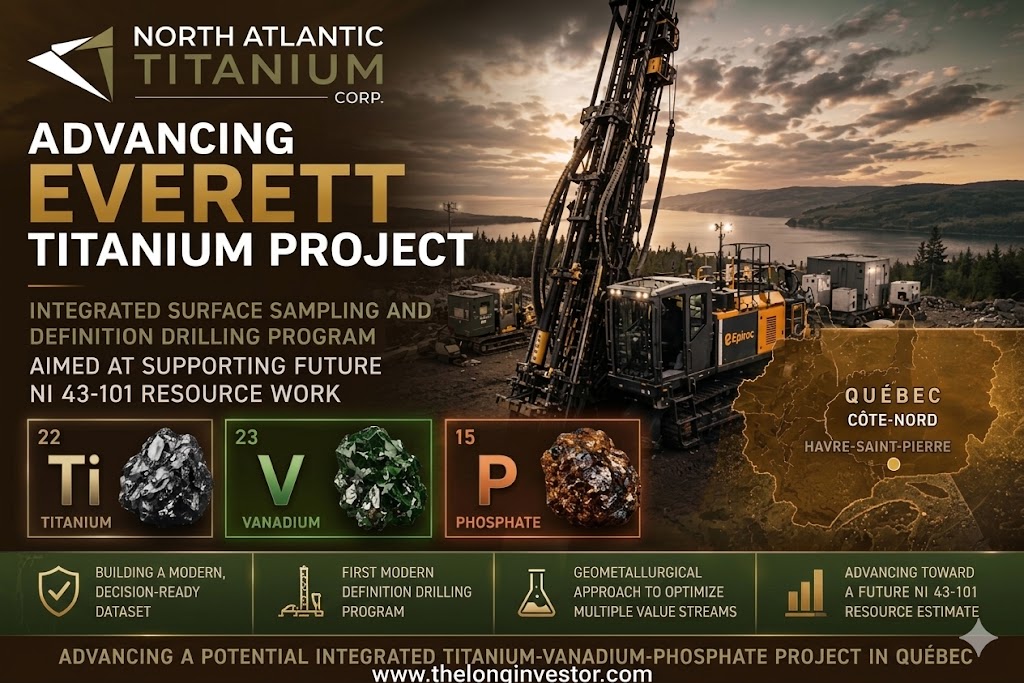
Looking closely at the framework for North Atlantic Titanium Corp. (#NATO), the economic thesis isn't built on a single commodity, but rather a highly integrated, multi-commodity value stream:
Titanium (Ti): Onshore, secure metallurgical feedstock for defense, aerospace, and industrial supply lines facing massive structural deficits.
Vanadium (V): Critical component for long-duration grid energy storage chemistry.
Phosphate (P): Essential agricultural and chemical feedstock.
True project derisking isn't found in flashy press release headlines—it’s built through the systematic accumulation of geotargeted drilling data to establish a modern, NI 43-101 compliant resource model.
I’ve mapped out a full trajectory analysis tracking exactly how this asset is being technically validated from the ground up.
As we watch the definition drilling data mature over the coming quarters, what specific metallurgical thresholds or grade consistencies are you tracking closest on the North Shore corridor? Let's hear your thoughts below.
👇 Full data archive and continuous trajectory tracking logs over at www.thelonginvestor.com.