



(TheNewswire)
 | |||||||||
 |  | ||||||||
Vancouver, B.C., October 22, 2026 – TheNewswire - IDEX Metals Corp. (TSXV: IDEX / OTCQB: IDXMF) ("IDEX" or the "Company") is pleased to announce that drill hole KSMT26016 has intersected porphyry-style copper-molybdenum mineralization at the Solstice target (previously the Target A IP anomaly) in the North Breccia area of its Freeze Property in Washington County, western Idaho. KSMT26016 is the first hole on the property to intersect copper and molybdenum mineralization within a porphyry intrusion, marking a new discovery within the Idaho Copper Belt. Observations are based on preliminary visual logging. Assay results are pending.
Highlights
-
First porphyry-style mineralization and veining intersection at Freeze: KSMT26016 intersected porphyritic granodiorite cut by A-, B- and D-type quartz vein stockwork, the first mineralized porphyry intrusion encountered on the property.
-
Copper and molybdenum sulfides observed: Chalcopyrite, and molybdenite were logged in the vein stockwork and host intrusion in conjunction with pyrite.
-
Classic porphyry alteration: Phyllic (quartz-sericite-pyrite) alteration transitions to sericite-chlorite-pyrite alteration at depth, a zoning pattern typically noted in porphyry copper systems.
-
IP target confirmed: The hole tested the target east of the North Breccia, a large, induced polarization (IP) chargeability anomaly previously disclosed by the Company. Chargeability coupled with resistivity centers can indicate proximity to stockwork mineralization.
-
Encouraging results at Kismet: As previously reported, every hole completed at Kismet in 2026 has intersected visible oxide copper mineralization. Several Kismet holes have been fast-tracked through the laboratory, with assays expected imminently, to allow for batched releases of results. The Kismet results will be described in detail when they are released.
-
Assays pending: Core is being logged, cut and sampled. No assay results have been received, and the grade and economic significance of the mineralization have yet to be determined.
-
Drilling continues at Solstice and Shiver: The final holes of the 2026 season will focus on following up KSMT26016 at Solstice, and one drill rig will be moved to complete the first drill test of the Shiver target.
Drill Hole Locations
Click Image To View Full Size
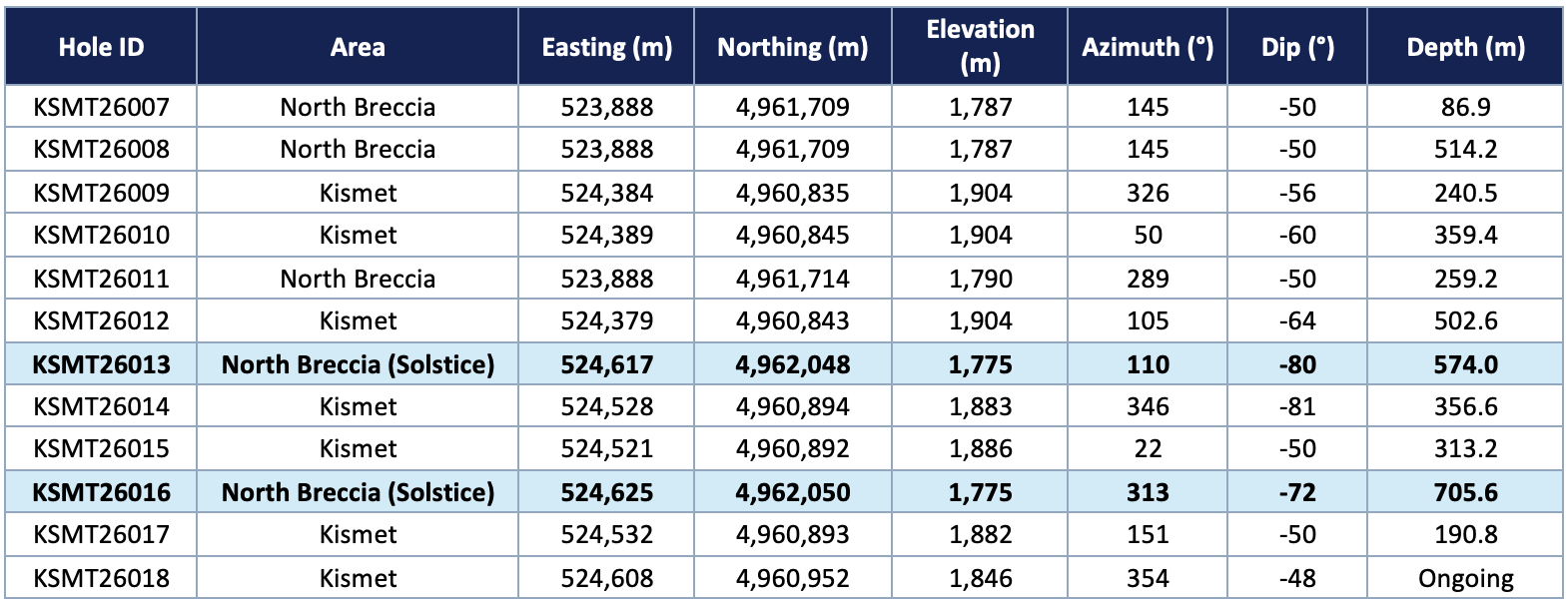
Table 1: Collar locations of the 2026 drill holes at the Freeze Property to date. *Drilling ongoing; Holes reported in this news release (KSMT26013 and KSMT26016) are highlighted. Coordinates are GPS NAD83 UTM Zone 11N; azimuth and dip are at the collar.
Discovery of Porphyry Mineralization in KSMT26016
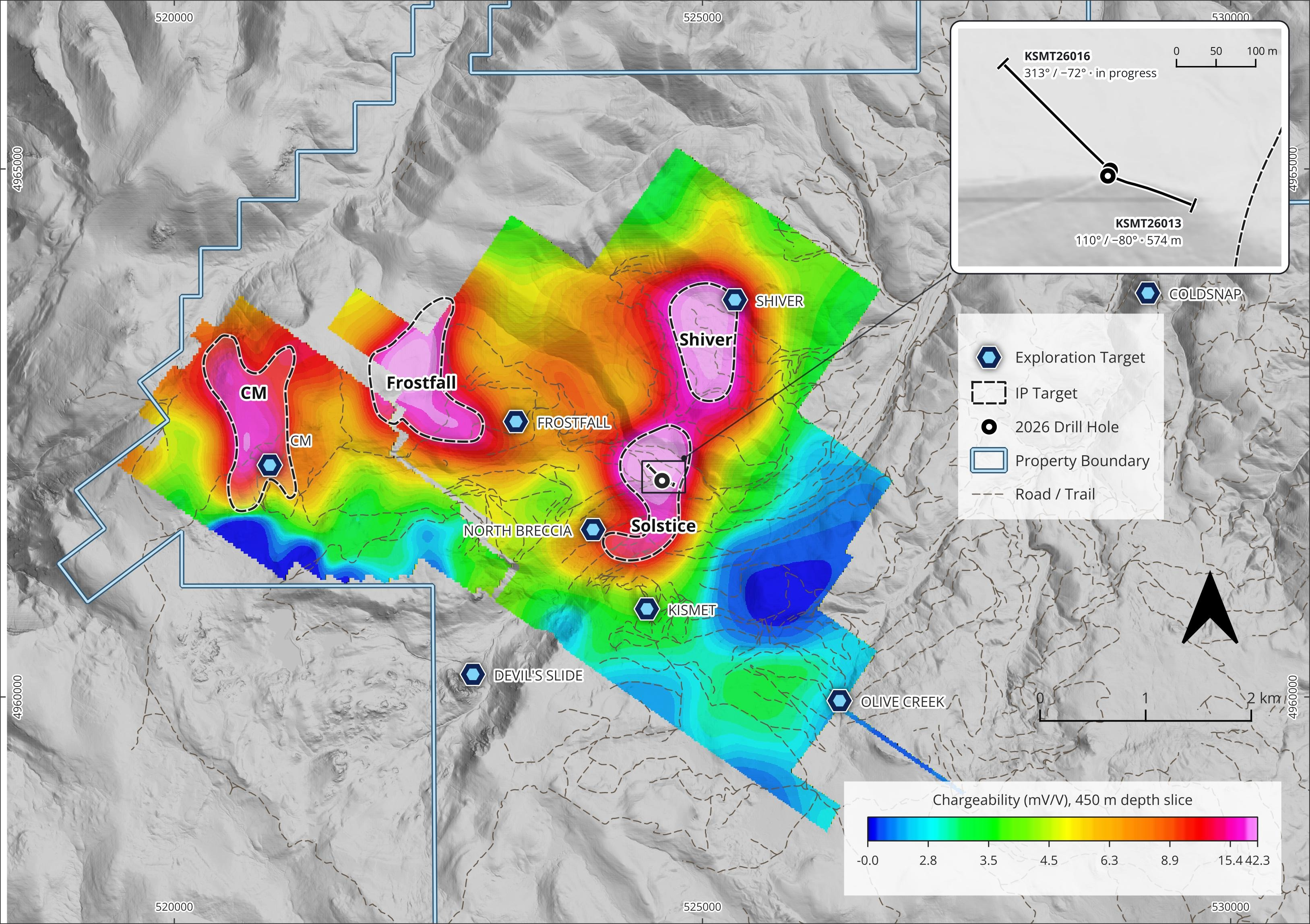
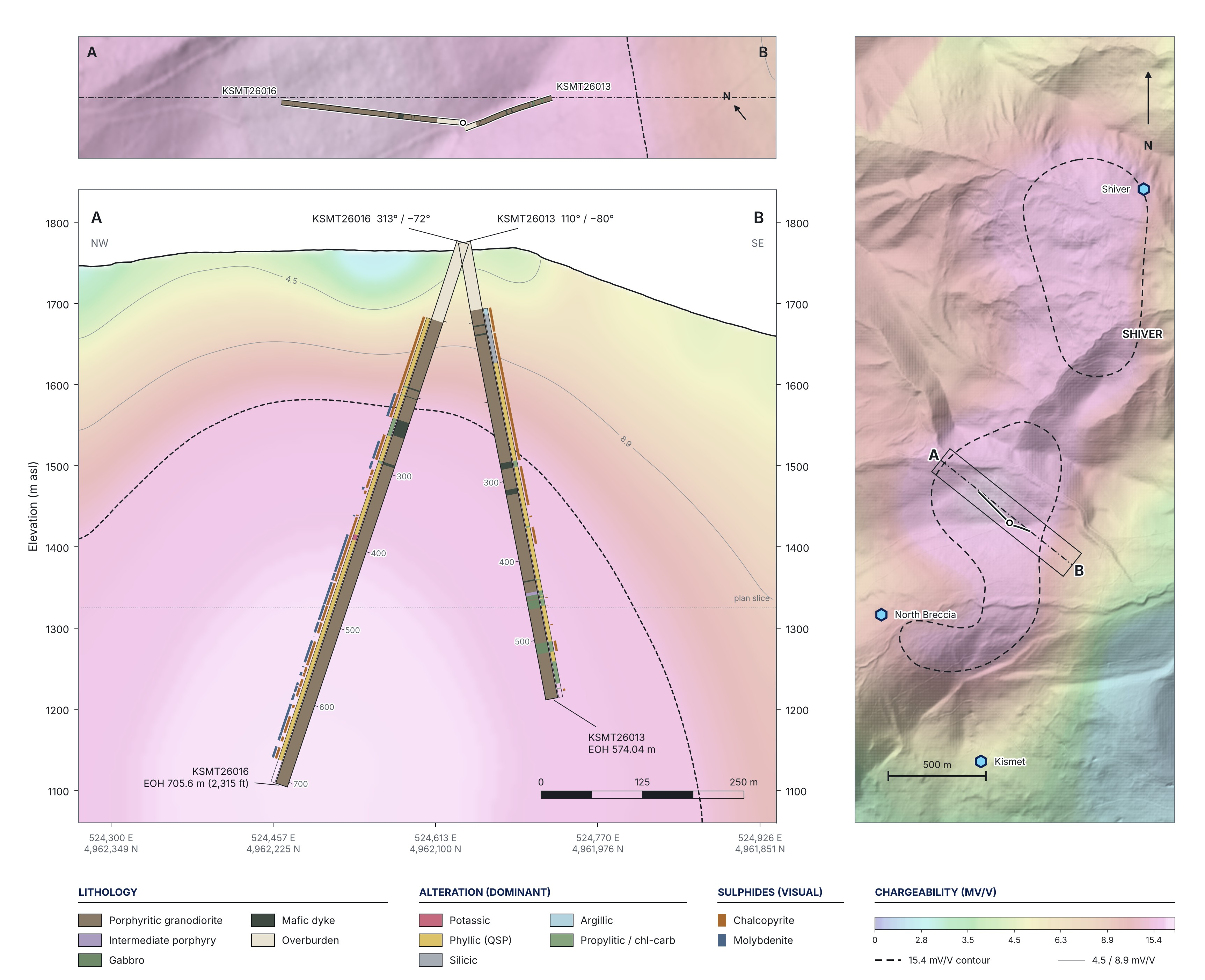
KSMT26016 was collared east of the North Breccia to test the Solstice chargeability anomaly. The hole was drilled at an azimuth of 313 degrees and a dip of -72 degrees and was completed at a final depth of 705.6 m. The cross-section below shows KSMT26016 together with KSMT26013, which was drilled from the same pad at an azimuth of 110 degrees and a dip of -80 degrees to 574.04 m.
Click Image To View Full Size
Figure 1: 2026 induced polarization (IP) chargeability at 450 m depth, showing the Solstice, Shiver, Frostfall and CM IP targets and drill holes KSMT26016 and KSMT26013. Inset shows the drill pad and hole traces.
The host rock is a quartz-porphyritic granodiorite. It is cut by a stockwork of three vein generations that are characteristic of porphyry copper systems (Gustafson and Hunt, 1975):
-
Early, anastomosing, irregular quartz-only veins (“A-type” veins) associated with the potassic stage of a porphyry system.
-
Straight-walled quartz veins (“B-Type” veins) with central sulfide (pyrite-chalcopyrite-molybdenite) seams
-
Later pyrite-rich veins (“D-type” veins) with sericite alteration halos
Phyllic alteration, locally intense, is developed through much of the intrusion and appears to overprint an earlier potassic alteration assemblage. Chalcopyrite and molybdenite were observed in the vein stockwork and as disseminations in the host rock. The stockwork runs from approximately 300 m depth to the end of the hole; however the greatest vein density is constrained between the depths of 300-600 m.
The Company is not reporting visual estimates of sulfide abundance. Mineralogy and alteration descriptions are based on preliminary logging and are subject to confirmation by assays and further study.
Click Image To View Full Size
Figure 2: Cross-section A-B (looking northeast) through KSMT26016 and KSMT26013 at North Breccia, showing logged lithology, dominant alteration and visually observed chalcopyrite and molybdenite over 2026 IP chargeability. Visual observations only; assays pending.
Click Image To View Full Size
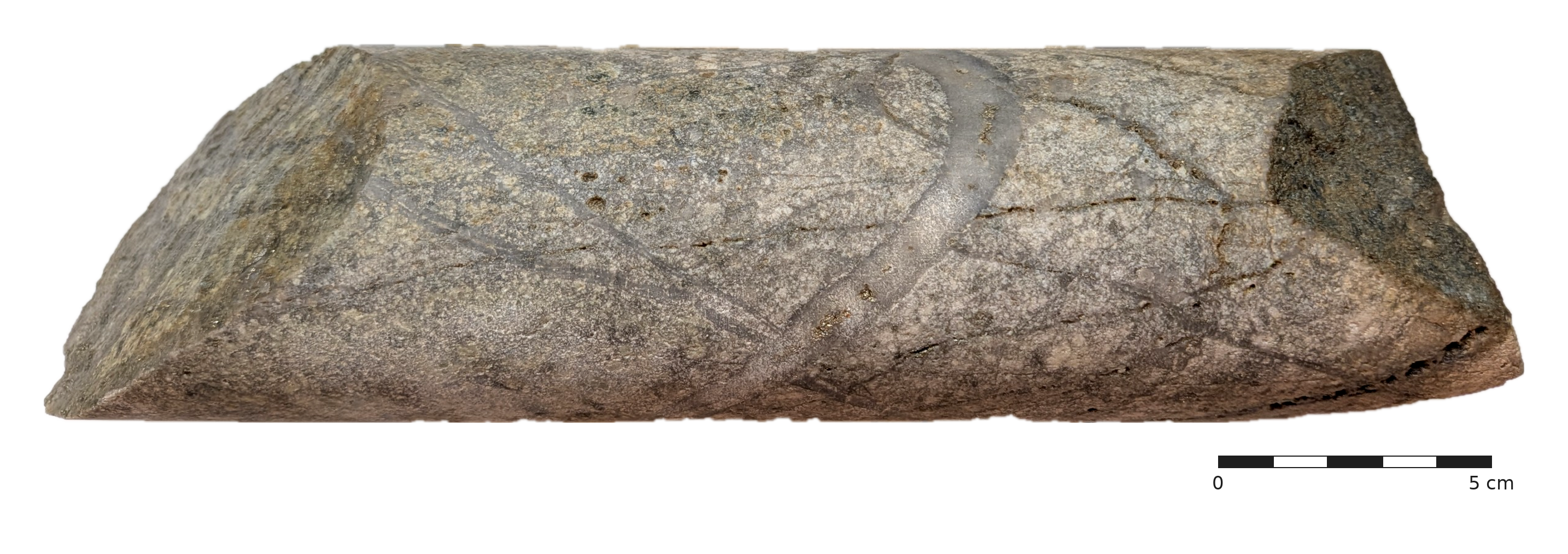
Figure 3: KSMT26016 (366.28 to 366.49 m): pyrite-chalcopyrite vein stockwork overprinted by phyllic (quartz-sericite-pyrite) alteration.
Click Image To View Full Size
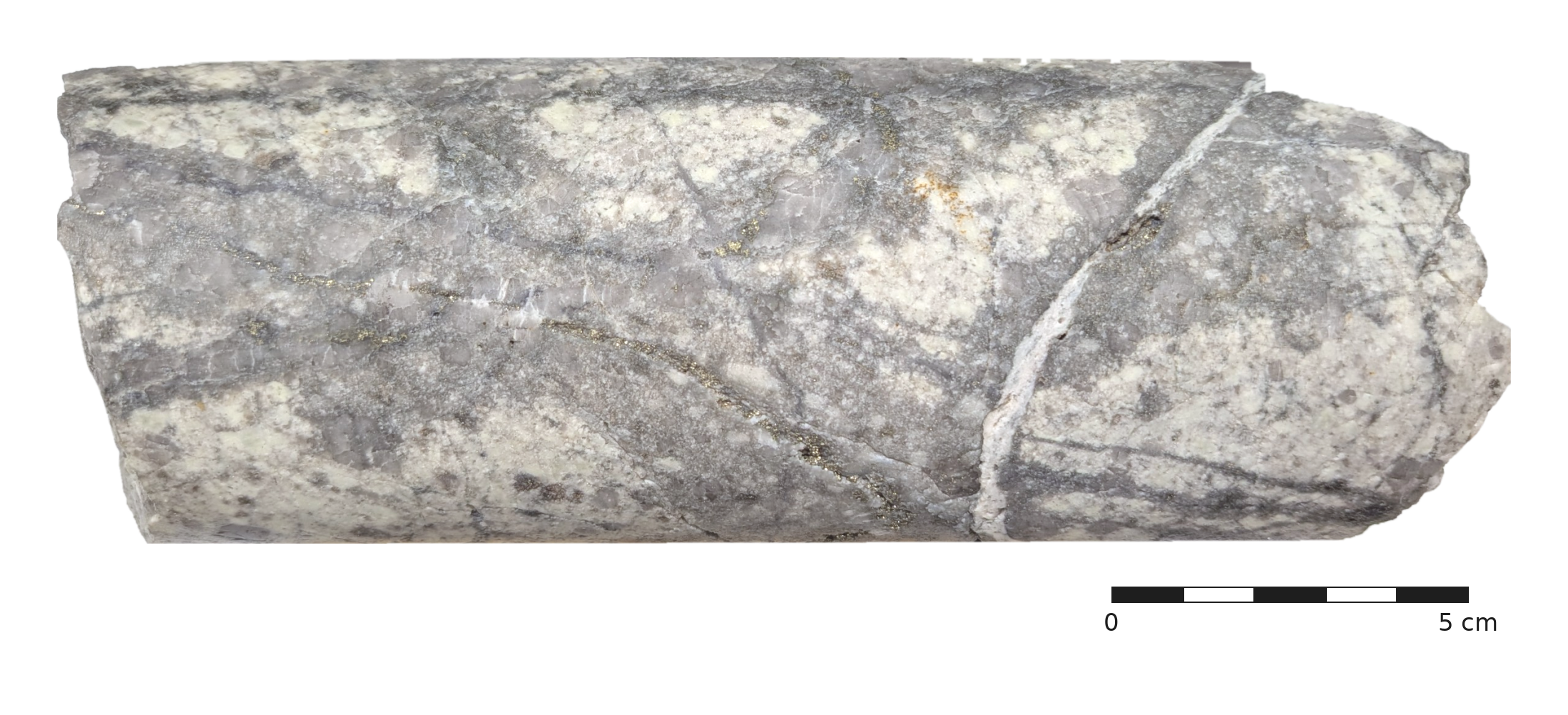
Figure 4: KSMT26016 (455.27 to 455.41 m): pyrite-chalcopyrite-molybdenite vein stockwork overprinted by phyllic (quartz-sericite-pyrite) alteration and later carbonate veining.
Click Image To View Full Size
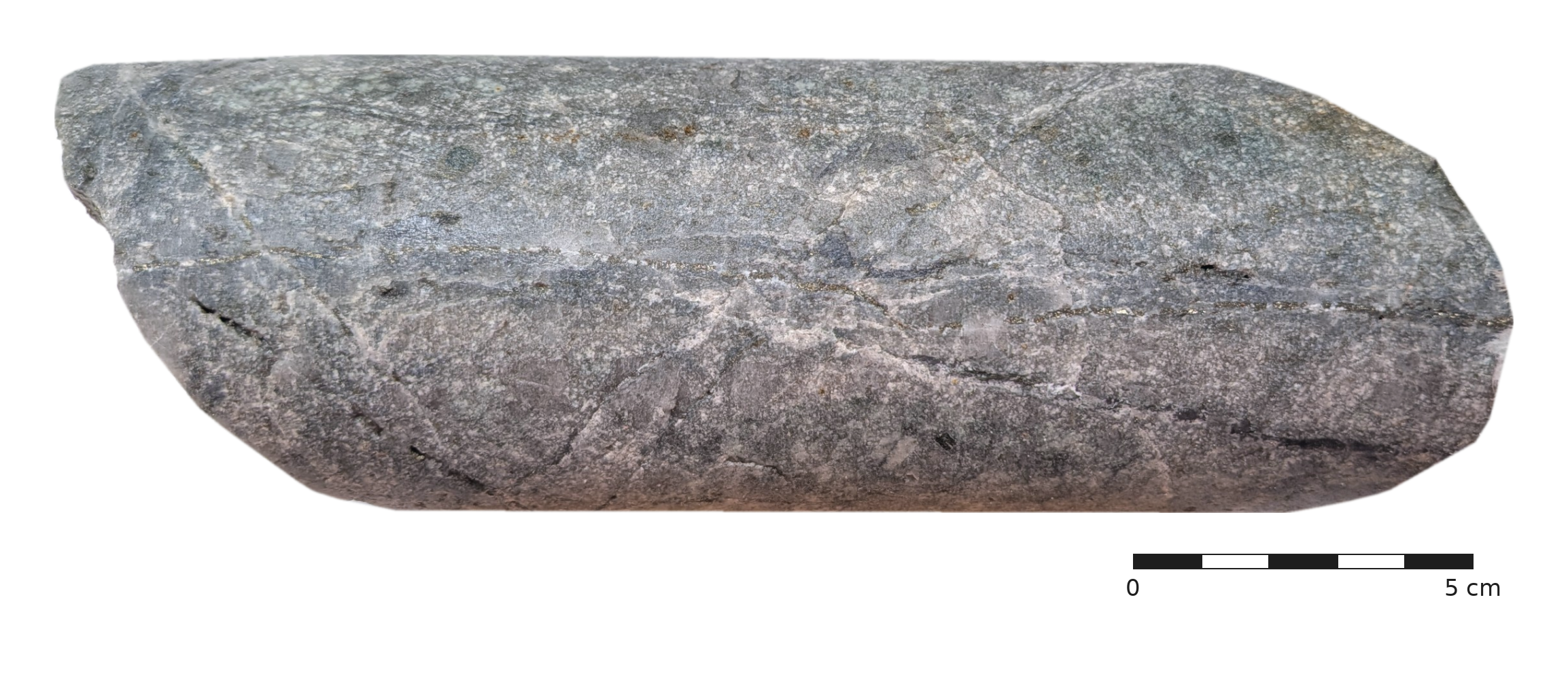
Figure 5: KSMT26016 (596.80 to 596.93 m): pyrite-molybdenite-chalcopyrite vein stockwork with chlorite-sericite alteration.
Core photos are selected to illustrate geological features and are not representative of the hole as a whole or indicative of grade.
KSMT26013: Phyllic Halo Southeast of KSMT26016
KSMT26013 was drilled first from the same pad as KSMT26016 but in the opposite direction, at an azimuth of 110 degrees and a dip of -80 degrees, to a final depth of 574 m. Below overburden, the hole intersected porphyritic granodiorite cut by mafic dykes and, in its lower part, gabbro and intermediate porphyry.
KSMT26013 intersected a broad zone of phyllic (quartz-sericite-pyrite) alteration from approximately 154 m to 530 m downhole, locally interleaved with chlorite-carbonate and propylitic alteration below approximately 425 m. Veining in this zone is dominated by pyrite veinlets and pyrite-bearing veins. Chalcopyrite was observed only locally.
KSMT26013 did not intersect the density of quartz-sulfide stockwork veining, or the chalcopyrite and molybdenite, observed in KSMT26016. The Company interprets KSMT26013 as having tested the pyritic phyllic halo on the southeastern flank of the system, while KSMT26016, drilled to the northwest, passed from this halo into the more intensely veined and mineralized part of the porphyry. Together, the two holes provide a vector to the northwest, toward which follow-up drilling will be directed.
As with KSMT26016, these observations are based on preliminary visual logging and are subject to confirmation by assays.
Why KSMT26016 and the Solstice Discovery Matter
KSMT26016 changes how the Company interprets the Freeze Property. Previous drilling at Kismet intersected copper and tungsten mineralization in an intrusive magmatic breccia system interpreted to be peripheral to possible porphyry mineralization. KSMT26016 is the first hole to intersect copper and molybdenum porphyry-style mineralization within an intrusion itself.
The result supports the Company's exploration model in three ways:
-
The IP anomaly has a porphyry source. Solstice is a large chargeability anomaly that remains open at depth and to the north-east. KSMT26016 shows that at least part of this anomaly is explained by a sulfide-bearing porphyry intrusion.
-
Solstice and the Shiver target appear connected. The geophysical data suggest Solstice is linked to the Shiver target (previously disclosed as Target B). If confirmed by drilling, this would indicate a porphyry system with a substantially larger footprint than tested to date.
-
The system is zoned. Phyllic alteration overprinting potassic alteration indicates the hole is within a part of the system that experienced multiple hydrothermal stages. This zoning can serve as a vector toward the potassic core, where higher copper and molybdenum grades are typically found in porphyry deposits.
Clayton Fisher, CEO of IDEX Metals commented, "KSMT26016 is a turning point for IDEX. For the first time, we have drilled into a porphyry system that we believe is driving the copper, tungsten and molybdenum mineralization on the Freeze property. The vein stockwork and alteration in this hole are textbook porphyry features, and they sit exactly where our IP data encouraged us to drill. The Solstice discovery was not made overnight, but it is the culmination of 3 years of hypothesis-based, iterative exploration work. However, it is now up to IDEX to prove the size and scale, and grade of porphyry mineralization at the Freeze property. We look forward to receiving assays and to using this hole to guide the next phase of drilling toward the core of the system."
Solstice and the Idaho Copper Belt
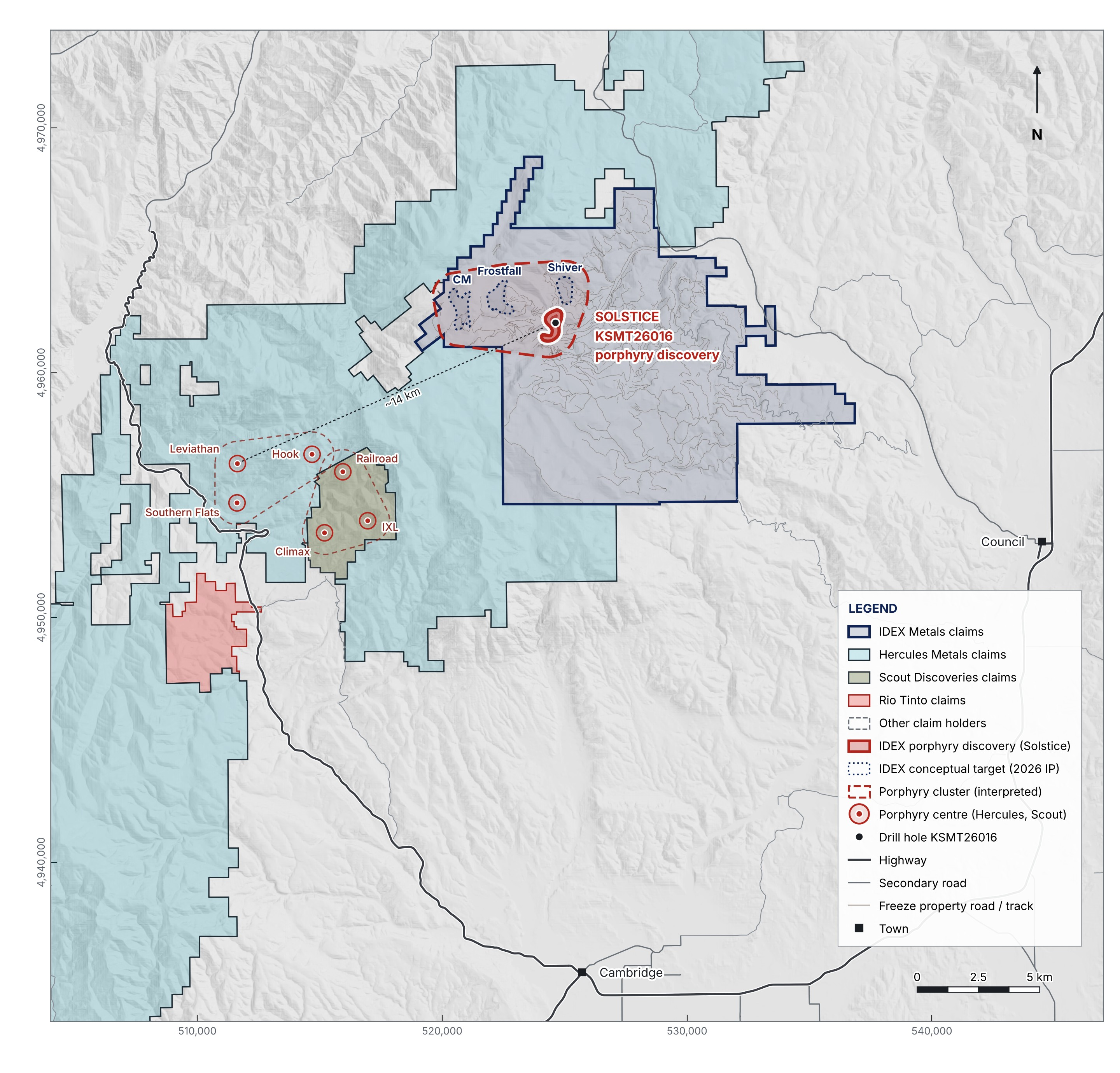
The Freeze Property lies in Washington County, western Idaho, within the Idaho Copper Belt, an emerging porphyry copper district that has drawn significant industry attention since Hercules Metals Corp. announced the Leviathan porphyry discovery in 2023, including a strategic investment in Hercules by Barrick. Within approximately 15 km of Freeze, porphyry copper systems have been identified at Hercules Metals' Leviathan discovery, with the Southern Flats zone and Hook target under investigation, and at Scout Discoveries Corp.'s Cuddy Mountain project, where the IXL, Climax and Railroad porphyries are currently being explored. KSMT26016 adds a true porphyry at Solstice, in the North Breccia area, approximately 14 km east-northeast of Leviathan.
Porphyry copper deposits commonly occur in clusters, with several intrusive centres spaced a few kilometres apart along a shared structural corridor (Sillitoe, 2010). The Leviathan, Southern Flats and Hook targets, and the IXL, Climax and Railroad centres at Cuddy Mountain, each appear to follow this pattern. The Company interprets Solstice, together with the Shiver, Frostfall (previously Target C) and CM (previously Target D) IP chargeability targets, as a potential third porphyry cluster in the belt, centred on the Freeze Property. If confirmed by drilling, this would extend the known footprint of porphyries in the belt to the east-northeast and indicate that the belt hosts multiple, separate porphyry clusters rather than a single isolated system.
North Breccia lies approximately 0.9 km northwest of the Kismet target. The Company interprets Kismet and North Breccia as parts of a broader intrusion-centred magmatic-hydrothermal system, with Solstice and Shiver defining a corridor of chargeable sulfide that remains largely untested by drilling.
Click Image To View Full Size
Figure 6: Western Idaho Copper Belt, showing claim holdings, the Solstice porphyry discovery and conceptual Shiver, Frostfall and CM IP targets at Freeze, and porphyries on adjacent properties. Hercules Metals and Scout Discoveries centre locations are approximate, compiled from company public disclosure (Hercules Metals, September 2026; Scout Discoveries, January 2026). Shiver, Frostfall and CM are conceptual targets defined by IP chargeability and have not been drill tested. The Company cautions that the presence of porphyry mineralization on adjacent properties, including those of Hercules Metals and Scout Discoveries, is not necessarily indicative of mineralization on the Freeze Property
Near Term Catalysts
-
Sampling and assays: Completed logging, cutting and sampling of holes KSMT26007 to KSMT26014, with samples submitted to AGAT Laboratories in Calgary, Alberta. Initial sample results are awaited and are expected imminently.
-
Rapid submission: Hole KSMT26016 is being prioritized and is now being cut, and is anticipated to be sent to AGAT Laboratories in short order.
-
Follow-up drilling: The remaining 2026 holes will test the extent of the intrusion at Solstice, and one rig will move to Shiver to test the target and its possible connection to Solstice.
Cautionary Statement Regarding Visual Observations
The observations in this news release are based on preliminary visual logging of drill core. Visual observations of rock type, alteration, vein types and sulfide minerals are not a substitute for laboratory analysis and should not be relied on as an indication of the grade, width or economic significance of any mineralization. Assay results are required to determine whether the mineralization is of economic interest. The Company will report assays once they have been received and reviewed.
QA/QC
Drill core is HQ, with possible deeper section of NQ diameter and is logged and photographed at the Company's core facility in Council, Idaho. Core will be cut in half, with one half submitted for analysis and the other retained for reference. Samples will be shipped under chain of custody to AGAT Laboratories in Calgary, Alberta, using ICP-OES finish (AGAT method 201-079) for all core samples. The Company's QA/QC program includes the insertion of certified reference materials, blanks and duplicates, as appropriate.
Qualified Person
The scientific and technical information contained in this news release has been reviewed and approved for disclosure by David Hladky, P.Geo. (registered in Alberta), V.P. Exploration of IDEX Metals Corp., who is a "Qualified Person" as defined by National Instrument 43-101.
References
Gustafson, L.B., and Hunt, J.P., 1975. The porphyry copper deposit at El Salvador, Chile. Economic Geology, v. 70, no. 5, p. 857-912.
Sillitoe, R.H., 2010. Porphyry copper systems. Economic Geology, v. 105, no. 1, p. 3-41.
About IDEX Metals Corp.
IDEX Metals Corp. is a mineral exploration company focused on advancing a portfolio of base and precious metal projects in Idaho, USA. IDEX is primarily focused on the exploration and development of the Freeze Copper-Gold porphyry prospect located in the newly discovered Idaho Copper Belt, Washington County, Idaho. With a strategic land position in a great mining jurisdiction and surrounded by major industry players, IDEX is committed to redefining district-scale exploration in Idaho.
For more information, please visit https://idexmetals.com/
ON BEHALF OF THE BOARD OF DIRECTORS
Clayton Fisher
CEO & Director
For further information regarding IDEX contact:
Investor Relations
Email: info@idexmetals.com
Phone: 1 (604) 260-0356
Cautionary Note Regarding Forward-Looking Statements
This news release contains forward-looking statements and forward-looking information within the meaning of applicable securities laws. Forward-looking statements include, but are not limited to, statements regarding the interpretation of drill hole KSMT26016, the expected timing of assay results, the possible connection between the Solstice and Shiver targets, the interpretation of a potential porphyry cluster at Freeze, the Company's exploration model and future exploration plans. These statements are based on current expectations and assumptions and involve known and unknown risks and uncertainties, including that assay results may not confirm economic mineralization, that geological interpretations may change, and risks related to financing, permitting, weather and field conditions. Actual results may differ materially from those expressed or implied. Readers are cautioned not to place undue reliance on forward-looking statements. The Company disclaims any obligation to update forward-looking statements, except as required by applicable securities laws.
Neither the TSX Venture Exchange nor its Regulation Services Provider (as that term is defined in the policies of the TSX Venture Exchange) accepts responsibility for the adequacy or accuracy of this release.

Copyright (c) 2026 TheNewswire - All rights reserved.
