


Brisbane, Queensland, Australia--(Newsfile Corp. - September 9, 2026) - Graphene Manufacturing Group Ltd. (TSXV: GMG) (OTCQX: GMGMF) ("GMG" or the "Company") is pleased to provide the latest progress update on the next generation graphene battery technology being developed by GMG under a Joint Development Agreement with Rio Tinto, one of the world's largest metals and mining groups, and with the support of the Battery Innovation Center of Indiana ("BIC") in the United States of America.
GMG is pleased to share the following cycling data of GMG's fast charging G®CELLS (1 Ah cells with 6 minute charging) as seen in Figure 1, with voltage and capacity graphs shown in Figure 2. This data was collected by the BIC on cells that were made by the BIC with materials that were developed, manufactured and supplied by GMG in its Brisbane Battery Development Centre.
Figure 1 shows that G®CELLS have cycled with no performance reduction after 489 cycles, as at September 4th 2026, despite being charged and discharged within 6 minutes for each cycle. Figure 1 also shows the performance of a well-known Lithium Titanate Oxide (LTO) battery which, when charged under the same cycling profile, degraded to 86% of original capacity (near the 80% state of charge which is typically the declared end of life of a cell) within 64 cycles. The G®CELLS have effectively lasted over seven times longer when cycling with the same testing.
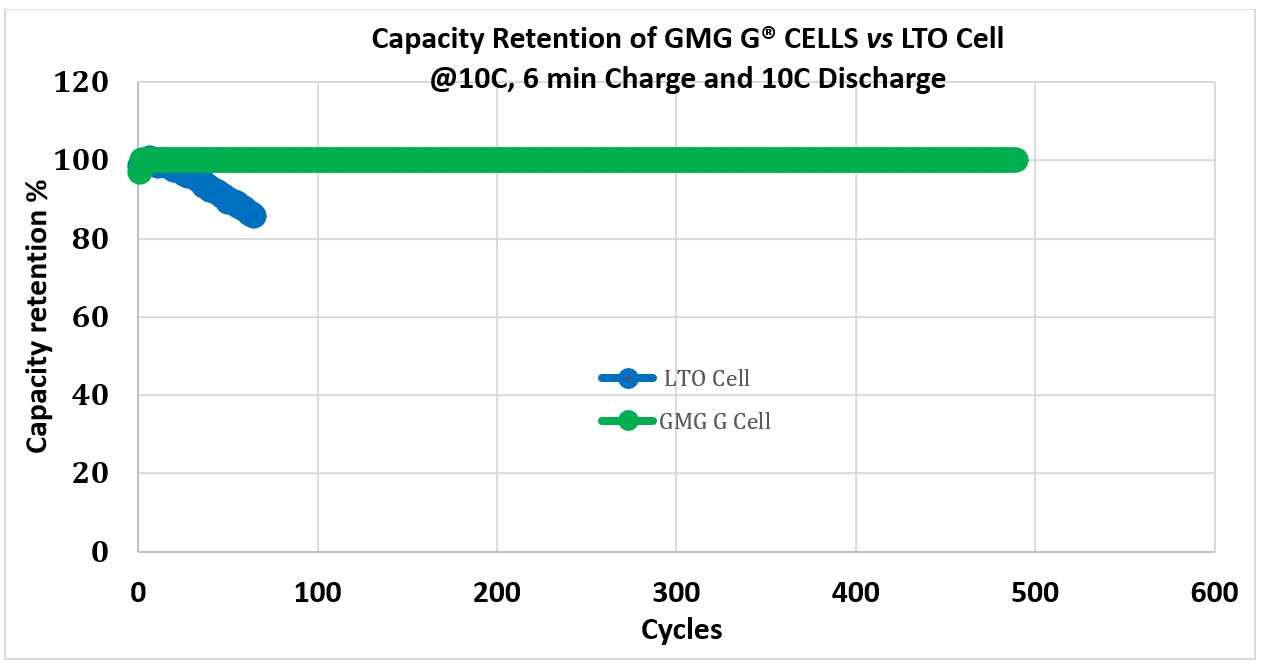
Figure 1: GMG G® CELLS and LTO Cycling data with no degradation or performance reduction
after 489 cycles with 10C 6 minutes charge and 10C 6 minutes discharge
To view an enhanced version of this graphic, please visit:
https://images.newsfilecorp.com/files/8082/313606_gmgfig1.jpg
Figure 2 shows very flat voltage and capacity curves with little change of voltage during ~80% of the discharge cycle, especially when compared to the LTO cells. The G®CELLS constant voltage during a large percentage of discharge time is a valuable battery parameter to support easier to control constant power discharge.
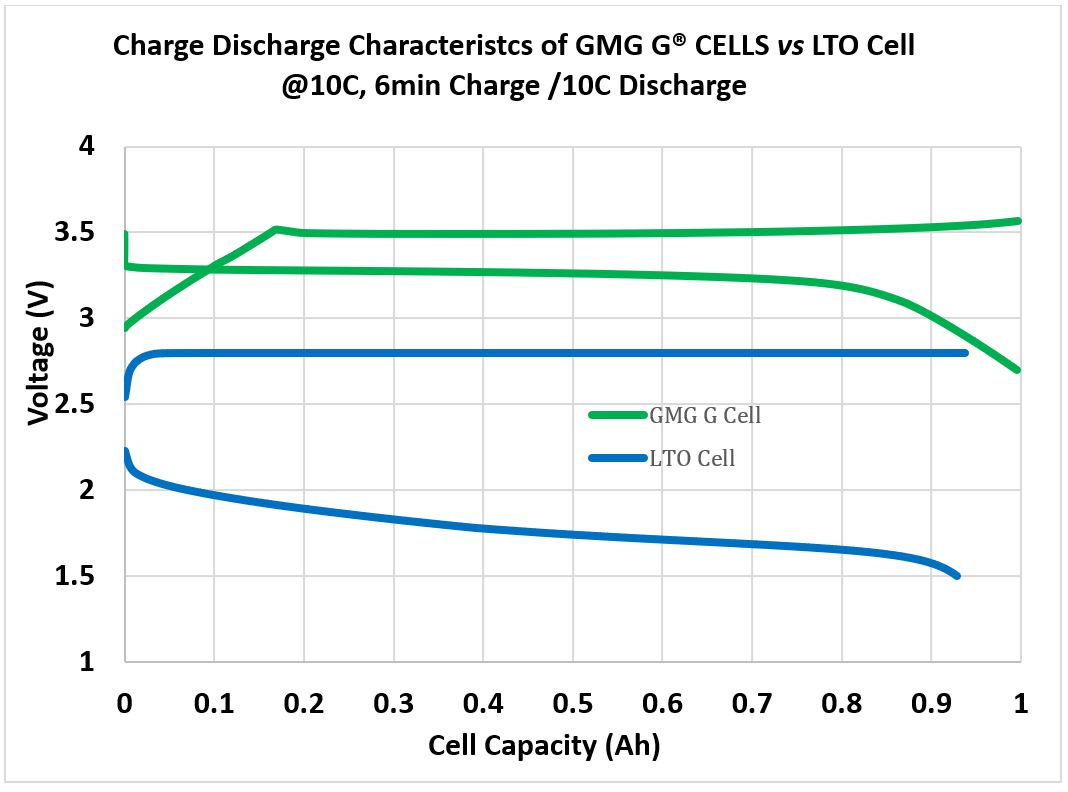
Figure 2: Charge Discharge Characteristics of GMG G® CELLS and LTO Cell
To view an enhanced version of this graphic, please visit:
https://images.newsfilecorp.com/files/8082/313606_gmgfig2.jpg
The battery performance data for measured energy density, temperature and resistance for each of these cells achieved is seen in Figure 3. While the energy density is lower than previously reported, this is unoptimized and the Company believes it can bring this energy density back up to around 50 Wh/kg (10 C charge rate) after further optimisation is done after initial testing. The very low resistance of the G®CELLS of ~ 0.005 Ohms (5 mOhms) allowed for a very low temperature increase of 4o C above ambient despite charging at very high speeds – as compared to the LTO cells resistance of up to 0.030 Ohms (30 mOhms) which increased by 19oC above ambient during testing.
| Charging/Discharging & Type of Cells | Energy Density (Wh/kg) | Temperature (deg C) – Ambient: 25 deg C | Resistance (Ohm) |
| 10 C / 10 C – G® CELLS | 39 | 29 | 0.005 |
| 10 C / 10 C - LTO | 37 | 44 | up to 0.030 |
Figure 3: GMG G Cells and LTO measured performance data
Bob Galyen, GMG Director and former Chief Technology Officer of CATL, commented: "The cycling stability we are seeing from these G®CELLS is genuinely exceptional. Sustaining zero measurable capacity fade past 489 cycles under a full 10C charge and 10C discharge regime, each cycle completed in six minutes, is a result that stands in stark contrast to the LTO benchmark cell, which is regarded as one of the most robust fast-charging chemistries on the market today and still degraded to end-of-life within 64 cycles under the same profile. The very low internal resistance of around 5 mOhms, and the resulting 4 degree temperature rise above ambient, tells me GMG's material science is translating into real, measurable cell-level performance rather than just laboratory promise. Having built and scaled battery manufacturing for the world's largest lithium-ion producer, I know how rare it is to see this combination of fast-charge durability and thermal control this early in a cell's development. There is clear further work ahead on some of the energy density optimisation and further scaling of the cell size, but the fundamentals being demonstrated here are the right ones to be solving first."
Craig Nicol, Chief Executive Officer and Managing Director of GMG, commented: "This data set from BIC is an important proof point for our graphene battery program. Fast charging is one of the biggest barriers to broader electric vehicle and energy storage adoption, and these results show G®CELLS can be repeatedly charged and discharged in six minutes with no measurable degradation after 489 cycles, well beyond where the comparable LTO cell reached end of life. We are also encouraged by the very low resistance and minimal temperature rise, which speak directly to the safety and thermal management advantages we believe graphene can bring to battery design. Energy density is an area we are continuing to optimise, and we are confident, based on the pathway BIC and our own team have identified, that we can lift this back towards 50 Wh/kg at a 10C charge rate as this program matures. I want to thank the team at BIC and our partners Rio Tinto, for their continued collaboration as we progress this technology along the roadmap."
Jack Perkowski, Chairman of GMG, commented: "Battery development of this kind requires patient capital, disciplined engineering and world-class partners, and this update reflects progress on all three fronts. The fact that BIC, an organisation with a decade of experience and over 500 battery development projects behind it, is generating this kind of independently measured cycling data on cells built with GMG's graphene materials gives the Board real confidence in the direction of this program. Combined with the ongoing support of Rio, I believe GMG is building the right foundations to advance this technology toward commercial relevance, and the Board will continue to support management as they work through the optimisation steps ahead."
Please see the following webpage for further details about the graphene batteries: https://graphenemg.com/graphene-products/gcells/. The G®CELLS are in pouch format - as seen in Figure 4. The launch video link for G®CELLS is shown in Figure 5.
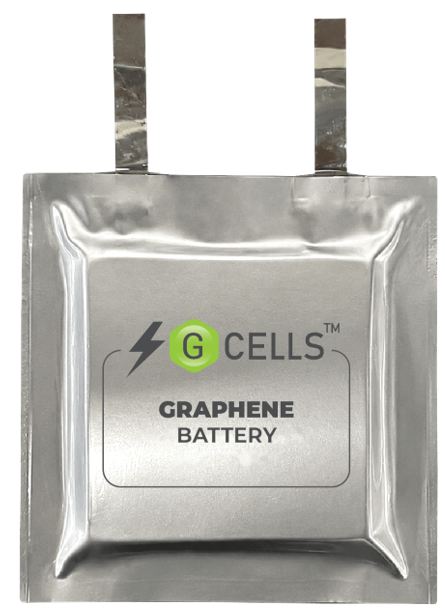
Figure 4: G Cell Pouch Cell Battery
To view an enhanced version of this graphic, please visit:
https://images.newsfilecorp.com/files/8082/313606_gmgfig4.jpg
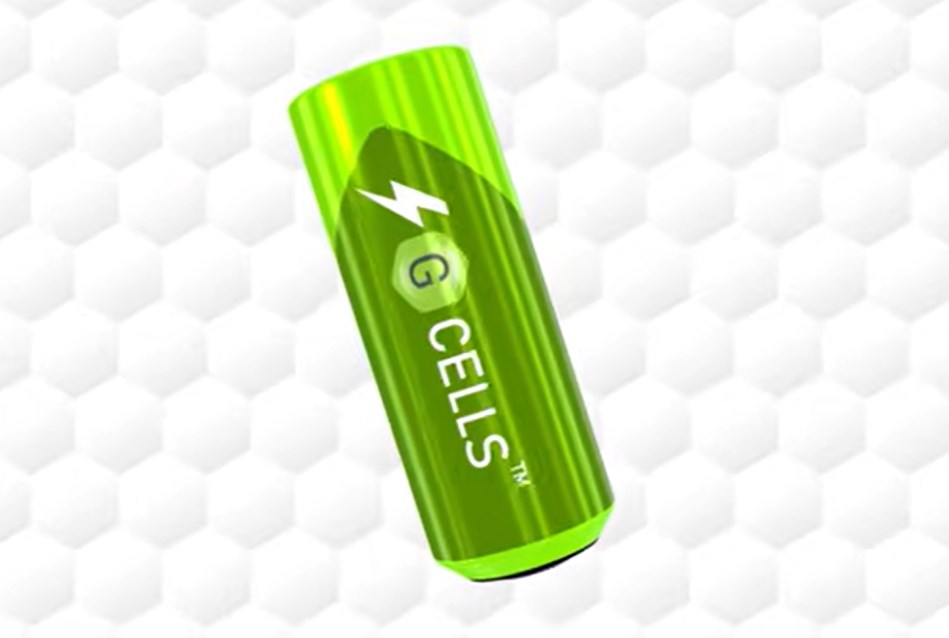
Figure 5: G®CELLS Launch Video
Launch video: https://youtu.be/pfHhh5-TLyU
To view an enhanced version of this graphic, please visit:
https://images.newsfilecorp.com/files/8082/313606_76d5197784c8692d_004full.jpg
About BIC:
BIC is a collaborative initiative designed to incorporate leadership from renowned universities, government agencies, and commercial enterprises. BIC is a public-private partnership and a not-for-profit organization focusing on the rapid development, testing and commercialization of safe, reliable and lightweight energy storage systems for defense and commercial customers. BIC is a unique organization that has been leading battery cell development for world leading battery companies for over 10 years and has carried out over 500 battery development projects.
About GMG
GMG is an Australian based clean-technology company which develops, makes and sells energy saving and energy storage solutions, enabled by graphene manufactured via in house production process. GMG uses its own proprietary production process to decompose natural gas (i.e. methane) into its natural elements, carbon (as graphene), hydrogen and some residual hydrocarbon gases. This process produces high quality, low cost, scalable, 'tuneable' and low/no contaminant graphene suitable for use in clean-technology and other applications.
The Company's present focus is to de-risk and develop commercial scale-up capabilities, and secure market applications. In the energy savings segment, GMG has initially focused on graphene enhanced heating, ventilation and air conditioning ("HVAC-R") coating (or energy-saving coating) which is now being marketed into other applications including electronic heat sinks, industrial process plants and data centres. Another product GMG has developed is the graphene lubricant additive focused on saving liquid fuels initially for diesel engines.
In the energy storage segment, GMG is working collaboratively with financial support from the Australian Government to progress R&D and commercialization of GMG Graphene Batteries. GMG has also developed a graphene additive slurry that is aimed to improve the performance of lithium-ion batteries.
GMG's 4 critical business objectives are:
- Produce Graphene and improve/scale cell production processes
- Build Revenue from Energy Savings Products
- Develop Next-Generation Battery
- Develop Supply Chain, Partners & Project Execution Capability
For further information please contact:
- Craig Nicol, Chief Executive Officer & Managing Director of the Company at craig.nicol@graphenemg.com, +61 415 445 223
- Leo Karabelas at Focus Communications Investor Relations, leo@fcir.ca, +1 647 689 6041
Neither the TSX Venture Exchange nor its Regulation Services Provider (as that term is defined in the policies of the TSX Venture Exchange) accept responsibility for the adequacy or accuracy of this news release.
Cautionary Note Regarding Forward-Looking Statements
This news release includes certain statements and information that may constitute forward-looking information within the meaning of applicable Canadian securities laws. Forward-looking statements relate to future events or future performance and reflect the expectations or beliefs of management of the Company regarding future events. Generally, forward-looking statements and information can be identified by the use of forward-looking terminology such as "intends", "expects" or "anticipates", or variations of such words and phrases or statements that certain actions, events or results "may", "could", "should", "would" or will "potentially" or "likely" occur. This information and these statements, referred to herein as "forward‐looking statements", are not historical facts, are made as of the date of this news release and include, without limitation, statements that GMG Graphene Batteries are safe and fast charging and that graphene can be used to increase their performance and cycle life, statements regarding the Company's ability to bring energy density back up to around 50 Wh/kg (10 C charge rate) after further optimisations, GMG's intentions to develop commercial scale-up capabilities, GMG's focus in the energy savings segment, GMG's intentions for the use of graphene lubricant additive on saving liquid fuels, expectations for R&D and commercialisation of Graphene Batteries, GMG's ability to improve the performance of lithium-ion batteries, statements attributed to Bob Galyen, Craig Nicol and Jack Perkowski regarding the significance of the BIC cycling data, the Company's technology, partnerships and commercial prospects, and the Company's four critical business objectives.
Such forward-looking statements are based on a number of assumptions of management, including, without limitation, assumptions that GMG Graphene Batteries can be produced at lower cost, as to charging time, energy density, life cycle, safety, thermal runaway risk and the need for a thermal management system for, the speed and stability of charging, that GMG Graphene Batteries will progress to BTRL 7 and 8, that a range of global companies in a variety of industries will be interested in working with GMG, that the battery pack design will be plastic and offer weight, cost and complexity advantages to a metal case and increased energy density, that the service agreement with the BIC will enable the Company to optimize its cell design and battery manufacturing equipment, that the Company will be able to bring energy density back up to around 50 Wh/kg (10 C charge rate) as anticipated, and that the Company will be able to meet its overall timeline on the battery cell roadmap. Additionally, forward-looking information involves a variety of known and unknown risks, uncertainties and other factors which may cause the actual plans, intentions, activities, results, performance or achievements of GMG to be materially different from any future plans, intentions, activities, results, performance or achievements expressed or implied by such forward-looking statements. Such risks include, without limitation: that GMG Graphene Batteries cannot be produced at lower cost, or any of the assumptions as to charging time, energy density, life cycle, scaling of the cell size, safety, thermal runaway risk and the need for a thermal management system for GMG Graphene Batteries cannot be achieved; that GMG Graphene Batteries do not offer expected speed and stability of charging; that GMG Graphene Batteries will not progress to BTRL 7 and 8; that a range of global companies in a variety of industries will not be interested in working with GMG; that the battery pack design will not be plastic and will not offer weight, cost and complexity advantages to a metal case and increased energy density; that the Company will not be able to optimize the electrochemical behaviour of the pouch cell through laboratory experimentation or at all; that the Company will not be able to bring energy density back up to around 50 Wh/kg (10 C charge rate) or at all; that the Company will not be able to meet its overall timeline on the battery cell roadmap; that the service agreement with the BIC will not enable the Company to optimize its cell design and battery manufacturing equipment; that further testing or larger-format cells will not replicate the cycling, resistance or temperature performance reported in this news release; that the Joint Development Agreement with Rio Tinto will not continue on the terms or timeline currently anticipated; GMG's operations could be adversely affected by possible future government legislation, policies and controls or by changes in applicable laws and regulations, or by the failure to obtain all necessary regulatory approvals; public health crises such as pandemics may adversely impact GMG's business and the ability of the Company to develop its products; the volatility of global capital markets; political instability; the failure of GMG to attract and retain skilled personnel; unexpected development and production challenges; GMG could face technology or software disruptions; unanticipated costs; risks relating to the extent and duration of the conflicts in Eastern Europe and the Middle East and their impact on global markets; that the Company will be unable to develop, market, and sell its products as currently anticipated; that the Company will be unsuccessful in identifying and engaging strategic partners; that the Company will be unable to acquire equipment to streamline its production process, or that the expansion of its production facilities will not result in the benefits currently expected; that companies currently working with GMG or parties that have entered into NDA arrangements with the Company will not be interested in purchasing the Company's products; that GMG's products may not perform as anticipated or deliver the expected commercial benefits; that GMG's proprietary production processes may not provide an alternative to traditional graphite supply chains; that the Company will be unable to grow its sales or revenues as anticipated; that third-party market data and industry projections will not be accurate as presented; and the risk factors set out under the heading "Risk Factors" in the Company's annual information form dated November 04, 2025 available for review on the Company's profile at www.sedarplus.ca.
Although management of the Company has attempted to identify important factors that could cause actual results to differ materially from those contained in forward-looking statements or forward-looking information, there may be other factors that cause results not to be as anticipated, estimated or intended. There can be no assurance that such statements will prove to be accurate, as actual results and future events could differ materially from those anticipated in such statements. Accordingly, readers should not place undue reliance on forward-looking statements and forward-looking information. Readers are cautioned that reliance on such information may not be appropriate for other purposes. The Company does not undertake to update any forward-looking statement, forward-looking information or financial outlook that is incorporated by reference herein, except in accordance with applicable securities laws.

To view the source version of this press release, please visit https://www.newsfilecorp.com/release/313606