


TORONTO, ON / ACCESS Newswire / September 29, 2026 / BULGOLD Inc. (TSXV:ZLTO) (the "Company" or "BULGOLD") is pleased to announce the geological and geochemical modeling results from its 2026 diamond drilling programme at the Kopernica Vein System, located within the Lutila Gold Project, Slovak Republic.
The 2026 campaign - comprising drill holes KPDD002, KPDD003, KPDD004 and KPDD005 - has successfully achieved a critical technical milestone, confirming the discovery of a major epithermal upflow zone hosted within a rhyolite rock flow dome package located immediately south of the historic Kremnica low-sulfidation epithermal gold mine.
1. Highlights |
- Intact Epithermal System Confirmed: Low-cost, shallow drilling successfully verified a robust, fully intact low-sulfidation epithermal system across the Company's 100%-controlled area.
- Broad Upflow Zone Defined: Integrating data from the 2026 campaign, two earlier BULGOLD holes, and three historic holes outlines an epithermal upflow zone at least 500 meters wide and up to 1,000m long. The zone features widespread low-grade gold, characteristic epithermal rock textures and supporting pathfinder elements, arsenic (As), antimony (Sb) and thallium (Tl).
- Advanced Predictive Modeling: Combining comprehensive multi-element geochemistry with targeted X-ray diffraction (XRD) data has successfully mapped the 3D structural architecture of the host rhyolite block. This new alteration and mineralisation model provides clear vectors toward quartz vein structures.
- Key Mineralisation Trends Defined: Drill data has mapped specific high-priority zones and new potential across the rhyolite block:
- First Adularia Discovery (KPDD005): Identified the first adularia on the property within a 60-meter downhole intersection of intense-to-strong silicification on the current eastern margin of the upflow zone.
- West Vein Potential (KPDD004): Pervasive quartz-illite alteration identified throughout the hole indicating strong proximity to a major fluid conduit, with the target remaining open at depth and along strike.
- Parallel Targets: Geological indicators highlight potential for parallel-trending upflow zones hosting hidden quartz vein targets within the block.
- Tier-1 Jurisdiction & Infrastructure Advantage: The Lutila Gold Project delivers a rare combination of high-impact, greenfields exploration potential situated within a premier, historic mining district in the European Union. The asset benefits from exceptional local infrastructure, year-round access, and a clear regulatory framework, significantly lowering development hurdles and operational costs.
- Situated Within a Tier-1 Historic Trend: The Lutila Gold Project sits squarely between Central Slovakia's premier precious metal hubs: the Kremnica and Banská Štiavnica epithermal vein fields. These adjacent districts boast a 1,000-year mining legacy, providing a strong geological validation that the Lutila volcanic corridor is deeply rooted in a highly productive, gold-bearing regional framework.
- Exploration target: underground, high-grade gold (Au) ± silver (Ag) quartz veins.
Quote from the President & CEO, Mr. Sean Hasson:
"The 2026 drilling results mark a significant technical shift for the Kopernica Vein System. This campaign was designed to target narrow, gold-rich epithermal quartz veins; instead, the data has outlined an intact hydrothermal system spanning at least 500 meters in width. The presence of pervasive potassic alteration, elevated volatile pathfinder geochemistry, and widespread low-grade gold confirms that these drill holes have intersected the primary upflow zones of the system. Integrating XRD mineralogical data with multi-element lithogeochemistry has allowed us to model the alteration architecture of this completely altered rhyolite host block, providing clear vectors toward our primary target: epithermal quartz veins and associated hydrothermal breccias.
Historically, epithermal systems within this district exhibit well-defined vertical 'gold windows' - as seen at the nearby Kremnica epithermal deposit, which was mined over vertical extents of up to 400 meters. The strong hydrothermal brecciation and crustiform-colloform textures previously identified at surface across the property indicate a high fluid-flux environment driven by boiling processes, which are key mechanisms for quartz vein development. These drilling results validate our geological model and significantly expand the exploration potential of this 100%-controlled project as we advance our targeting strategy."
2. The Kopernica Vein System - Drilling |
The 2026 diamond drilling campaign at the Kopernica Vein System was designed to target interpreted epithermal quartz veins. The programme comprised four diamond drill holes - KPDD002, KPDD003, KPDD004 and KPDD005 - for a total of 780.05 metres. The campaign successfully achieved a critical technical milestone by expanding the project's scope from a discrete vein target to a large-scale epithermal upflow system with the potential to host multiple parallel vein structures.
The drilling programme was executed safely and within budget. All core was oriented and logged systematically at the Company's Lutila core shed facility, with excellent core recovery averaging 98%.
Integrating data from this 2026 campaign, two earlier BULGOLD holes, and three historic holes defines a major epithermal upflow zone at least 500 metres wide. This extensive zone features widespread anomalous gold mineralisation, characteristic epithermal rock textures, and a robust pathfinder element footprint consisting of arsenic, antimony and thallium.
| HOLE ID | DEPTH (m) | X_UTM34N | Y_UTM34N | Z_UTM34N | Azimuth | Dip | Comment |
| CVDD001 | 515.4 | 344676 | 5392596 | 575 | 91 | -67 | BULGOLD |
| KG-KP-2a | 98.5 | 344673 | 5392593 | 575 | 285 | -65 | HISTORIC |
| KG-KP-3 | 175 | 344588 | 5392645 | 581 | 100 | -45 | HISTORIC |
| KG-KP-5a | 157.3 | 344729 | 5392666 | 600 | 280 | -75 | HISTORIC |
| KPDD001 | 645.6 | 344667 | 5392585 | 574 | 280 | -49 | BULGOLD |
| KPDD002 | 209.65 | 344356 | 5392619 | 513 | 103 | -51 | BULGOLD |
| KPDD003 | 207.8 | 344412 | 5392510 | 518 | 80 | -51 | BULGOLD |
| KPDD004 | 148.2 | 344388 | 5392510 | 514 | 244 | -51 | BULGOLD |
| KPDD005 | 214.4 | 344769 | 5392275 | 594 | 55 | -50 | BULGOLD |
Table 1: Exploration drill hole information.
Selected analytical results highlighting the widespread anomalous gold mineralisation within the newly defined 500-metre-wide epithermal upflow zone at the Kopernica Vein System are presented in Table 2 (below). The data includes significant intercepts from the 2026 diamond drilling campaign, integrated with key intervals from earlier BULGOLD and historic drilling.
| HOLEID | FROM | TO | LENGTH | Au (g/t)* | Alteration Stage |
| CVDD001 | 33 | 51 | 18 | 0.14 | Sericite-Pyrite-Quartz |
| CVDD001 | 126 | 131 | 5 | 0.13 | Sericite-Pyrite-Quartz |
| CVDD001 | 358 | 364 | 6 | 0.13 | Sericite-Pyrite-Quartz |
| KG-KP-2a | 16.2 | 29 | 12.8 | 0.26 | Sericite-Pyrite-Quartz |
| KG-KP-3 | 1 | 7 | 6 | 0.29 | Sericite-Pyrite-Quartz |
| KG-KP-5a | 85.6 | 108 | 22.4 | 0.34 | Sericite-Pyrite-Quartz |
| KPDD001 | 7 | 11 | 4 | 0.29 | Sericite-Pyrite-Quartz |
| KPDD001 | 15 | 16 | 1 | 0.11 | Sericite-Pyrite-Quartz |
| KPDD001 | 22 | 23 | 1 | 0.12 | Sericite-Pyrite-Quartz |
| KPDD001 | 221 | 222 | 1 | 0.24 | Pyrite-Sericite±Quartz |
| KPDD001 | 418 | 420 | 2 | 0.17 | Pyrite-Sericite±Quartz |
| KPDD001 | 491 | 492 | 1 | 0.36 | Quartz-Sericite-Pyrite |
| KPDD001 | 498 | 504 | 6 | 0.14 | Quartz-Sericite-Pyrite |
| KPDD002 | 20 | 21 | 1 | 0.16 | Pyrite-Sericite±Quartz |
| KPDD003 | 31 | 33 | 2 | 0.19 | Sericite-Pyrite-Quartz |
| KPDD004 | 11 | 12 | 1 | 0.13 | Sericite-Pyrite-Quartz |
| KPDD004 | 31 | 38 | 7 | 0.10 | Sericite-Pyrite-Quartz |
| KPDD004 | 41 | 42 | 1 | 0.33 | Sericite-Pyrite-Quartz |
| KPDD004 | 55 | 56 | 1 | 0.10 | Pyrite-Sericite±Quartz |
| KPDD004 | 61 | 63 | 2 | 0.10 | Sericite-Pyrite-Quartz |
| KPDD005 | 48 | 49 | 1 | 0.15 | Quartz-Sericite-Pyrite |
| KPDD005 | 70 | 71 | 1 | 0.17 | Quartz-Sericite-Pyrite |
| KPDD005 | 85 | 86 | 1 | 0.18 | Quartz-Sericite-Pyrite |
Table 2: All significant gold intervals for drill holes within the Kopernica Vein System (refer to Table 3 for a description of the Alteration Stages).
*1m minimum composite length, 2m maximum internal dilution, 0.1g/t Au cut-off; the Company considers this to represent a ‘geological cut-off' which shows that gold is present within the Kopernica vein system at strongly anomalous values. True widths are unknown at this stage.
3. Lithology and Structural Architecture of the Kopernica Rhyolite Block |
The Jastrabá Formation represents the final, fifth stage of late-stage acidic Neogene volcanism in the Central Slovak Volcanic Field (Western Carpathians), active during the Upper Sarmatian to Lower Pannonian. It is particularly prominent on the margins of the Kremnica Mountains and the Štiavnica Stratovolcano.
Structural Architecture
The structural emplacement of the Jastrabá rhyolites is heavily controlled by active tectonics.
- Fault Controls: The volcanic products are bound to regional fault networks, specifically N-S to NE-SW striking faults.
- Volcanic Facies & Forms: They occur as a highly diverse architectural mix of extrusive domes, extensive dome/flow complexes, subvolcanic dykes, and shallow cryptodomes/intrusions.
- Thickness: The volcanic and volcanoclastic suite forms a continuous, 100- to 500-metre-thick complex.
Lithology & Petrography
The lithology spans both coherent magmatic rocks and vast volcanoclastic blankets:
- Kopernica Rhyolite Block: Predominantly composed of sanidine and minor albite phenocrysts, with subordinate biotite and hornblende, embedded within a vitric (glassy) groundmass. The lavas frequently exhibit distinctive spherulitic textures, characteristic of high-temperature devitrification.
- Coherent Lithofacies: Composed of plagioclase and alkali-feldspar rhyolites, often transitioning into vitrophyric varieties. Rapidly cooled margins commonly present as perlite, perlite glass, and obsidian.
- Volcanoclastic Suite: Highly explosive initial phases deposited extensive layers of acidic vitric tuffs, lapilli tuffs, pumice flows, agglomerates, and extrusive/phreatic breccias. These were deposited in terrestrial, fluvio-lacustrine and lacustrine environments.
- Alteration Products: The vitric components of the tuffs and the margins of the rhyolite domes have undergone extensive diagenetic and hydrothermal alteration, transforming heavily into bentonites (Al-Mg montmorillonite), kaolinite, opal-CT, and zeolites (clinoptilolite).
4. Hydrothermal Alteration & 3D Mineralogical Vectoring |
Integrating multi-element geochemistry with high-resolution quantitative X-ray diffraction (XRD) mineralogical mapping on drill core together with systematic exploration data has allowed the Company's technical team to reconstruct a highly precise 3D mineralogical and thermal model of the Kopernica epithermal vein system. By tracking the systematic depletion of mobile alkalis alongside the enrichment of volatile pathfinder elements and establishing diagnostic high- and low- temperature mineral phases, the Company has successfully quantified the alteration intensities into three distinct hydrothermal stages. This geochemical model provides an objective, mathematical vectoring tool to locate the fluid pathways of the system.
The geochemical data demonstrates a classic low-sulfidation epithermal trend: as hydrothermal fluids alter the pristine rhyolite melt, sodium is intensely leached out while potassium is fixed into stable secondary silicates (sericite, illite and adularia). This progression drops the alkali vector (Na/K mass ratio) from a fresh baseline of 0.25-0.45 down to an intense <0.10 within the highly altered upflow zones.
The core exploration database from the Kopernica area consists of 1,941 assayed drill core samples which define a highly consistent Zr/Ti ratio clustering tightly around an average of 0.054. This uniform signature demonstrates a high degree of geochemical homogeneity, confirming that the entire 500-metre-wide upflow system is hosted within a single, continuous rhyolite flow-dome block.
To establish a baseline, background geochemical values for un-mineralised rock were determined from 1,099 drill core samples from holes RRDD001 and RRDD002. These control holes were drilled previously by the Company into fresh Jastrabá rhyolite units at the Sinter Field, located approximately 2.8 km south-southwest of the project area.
The Company's drill holes average 74 ppm combined Cu+Pb+Zn which confirms the Kopernica vein system is a base metal poor, low-sulfidation epithermal system. This suppressed base metal profile strongly indicates that all drill holes have intersected the precious metal dominant upper levels of the hydrothermal upflow zone.
The defined alteration stages for the Kopernica vein system are presented in Table 3 (below) and the Kopernica vein system drilling by alteration stage are shown in Table 4 (below).
Figure 1 (below) shows the areal extent of the currently defined 500m-wide Kopernica epithermal system in plan view and Figure 2 (below) shows an example of the Quartz-Sericite-Pyrite alteration stage in drill core from KPDD005.
Kopernica Vein System Alteration Stage | Potassium Value (K_%) | Sodium Value (Na_%) | Alkali Vector (Na/K Mass Ratio) | Epithermal Pathfinder Signatures (As, Sb & Tl) | Gold Potential (ppm) | Key Geological Meaning & Features |
Fresh Rock (Baseline Control) | 3.0%-4.0% (Naturally High) | >1.0% (Intact) | 0.25-0.45 | As:<30ppm Sb:<10ppm | <0.005 | Pristine Rhyolite Melt. Unaltered volcanic groundmass. Feldspars are completely intact. |
| Pyrite-Sericite±Quartz | ~3.0% | <0.45% | <0.25 | As:30-150ppm Sb:10-40ppm Tl: <1ppm | Trace <0.01 (Max: 0.24) | Mixed Clay Zone. Pyrite-sericite veinlets ± patchy chalcedonic quartz. |
| Sericite-Pyrite-Quartz | 3.0%-4.0% | ~0.30% | ~0.10 | As:150-1,000ppm Sb:40-200ppm Tl: ~2ppm | Low ~0.20 (Max: 1.55) | Sericitic-Illitic Zone. Extensional vein-breccia formation with chalcedonic quartz-pyrite infill + veins/veinlets ± rare lattice bladed textures + geopetal structures. |
| Quartz-Sericite-Pyrite | >4.0% (May be lower due to quartz dilution) | <0.30% | <0.10 | As:>400ppm Sb:>100ppm Tl: >2.5ppm | Low ~0.30 (Max. 0.36) | Silicic-Potassic Zone. Strong silicification, extensional breccias, adularia deposition. |
Table 3: Geochemical and Alteration Vectoring Framework of the Kopernica Vein System.
Interpretation and Exploration Significance
- Delineating Structural Fluid Pathways: Tracking the downward trend of the alkali vector (Na/K) across successive alteration stages highlights zones of maximum fluid interaction. This drop efficiently pinpoints the central structural plumbing and high-permeability core of the system within the Quartz-Sericite-Pyrite alteration stage. Additionally, high-resolution XRD mineral mapping within KPDD004 (West Vein) isolates the presence of high-crystalline sericite together with illite and high quartz values indicating that the drill hole has intersected the upper portion of an upflow zone.
- Vectoring Volatile Pathfinder Footprints: Volatile elements (As, Sb, and Tl) show a strong upward trajectory that matches advanced rock alteration. The direct correlation between this elevated multi-element pathfinder suite and intense potassium enrichment outlines the areas of interest within the Kopernica vein system, specifically KPDD005.
- Chemical Validation of Hydrothermal Boiling: Adularia shares an identical chemical formula and overlapping XRD primary reflections with magmatic sanidine and orthoclase and standard quantitative XRD programmes routinely group them together. The intense potassic values observed in KPDD005 (up to 71.2% K-feldspar at 53.5m) strongly exceed primary magmatic expectations for typical rhyolites, indicating a dominant hydrothermal overprint due to boiling and K-metasomatism (hydrothermal adularia).
- Preservation of Steam Heated Alteration: Quantitative XRD mapping within the Sericite-Pyrite-Quartz alteration stage of KPDD005 (>95m to 214.4m (EOH)) identified an overprinting steam heated alteration zone composed of cristobalite and kaolinite. This low temperature (50°C to 150°C) assemblage represents a telescoping event in which near paleosurface acidic fluids collapse back down the upflow zone, perhaps in the wanning stages of the epithermal system. The presence of this steam heated alteration assemblage juxtaposed against the Quartz-Sericite-Pyrite alteration stage indicates that the epithermal system is fully preserved and confirms that the gold target window remains intact and has likely not been eroded.
- Targeting the Boiling Horizon: Key rock textures within the Sericite-Pyrite-Quartz and Quartz-Sericite-Pyrite alteration stages - specifically extensional breccias, geopetal structures, and diagnostic adularia deposition - confirm that the shallow 2026 drilling intersected the top of a fully intact epithermal system. The broad anomalous gold mineralisation (up to 1.55 ppm Au) within these upper altered horizons shows that the primary quartz vein targets remain untested immediately down-dip and along strike from current drilling.
HOLE ID | FROM | TO | INTERVAL (m) | ALTERATION STAGE |
KPDD001 | 5 | 65 | 60 | Sericite-Pyrite-Quartz |
KPDD001 | 65 | 490 | 425 | Pyrite-Sericite±Quartz |
KPDD001 | 490 | 510 | 20 | Quartz-Sericite-Pyrite |
KPDD001 | 510 | 645.6 | 135.6 | Pyrite-Sericite±Quartz |
KPDD002 | 0 | 85 | 85 | Pyrite-Sericite±Quartz |
KPDD002 | 85 | 120 | 35 | Sericite-Pyrite-Quartz |
KPDD002 | 120 | 135 | 15 | Pyrite-Sericite±Quartz |
KPDD002 | 135 | 150 | 15 | Sericite-Pyrite-Quartz |
KPDD002 | 150 | 209.65 | 59.65 | Pyrite-Sericite±Quartz |
KPDD003 | 20 | 40 | 20 | Sericite-Pyrite-Quartz |
KPDD003 | 40 | 207.8 | 167.8 | Pyrite-Sericite±Quartz |
KPDD004 | 10 | 45 | 35 | Sericite-Pyrite-Quartz |
KPDD004 | 45 | 60 | 15 | Pyrite-Sericite±Quartz |
KPDD004 | 60 | 110 | 50 | Sericite-Pyrite-Quartz |
KPDD004 | 110 | 148.2 | 38.2 | Pyrite-Sericite±Quartz |
KPDD005 | 35 | 95 | 60 | Quartz-Sericite-Pyrite |
KPDD005 | 95 | 214.4 | 119.4 | Sericite-Pyrite-Quartz |
CVDD001 | 30 | 170 | 140 | Sericite-Pyrite-Quartz |
CVDD001 | 170 | 340 | 170 | Pyrite-Sericite±Quartz |
CVDD001 | 340 | 380 | 40 | Sericite-Pyrite-Quartz |
CVDD001 | 380 | 515.4 | 135.4 | Pyrite-Sericite±Quartz |
Table 4: All Kopernica Drill Holes and Alteration Stage Classification.
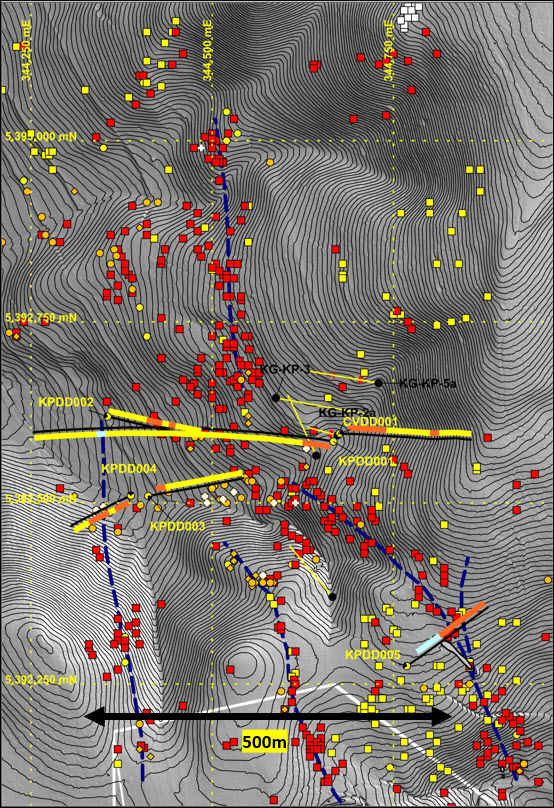
Figure 1. Kopernica drill hole traces and location showing the mapped alteration stage and the current 500m-wide extent of the epithermal system; yellow = Pyrite-Sericite±Quartz, orange = Sericite-Pyrite-Quartz, light blue = Quartz-Sericite-Pyrite; dark blue dashed lines represent the current inferred vein structure (upflow zone) trends based on surface float mapping; See Table 5 for a description of surface mapping points and Figures 4,5 & 6 for the location of the Kopernica Vein System within the Lutila exploration licence.
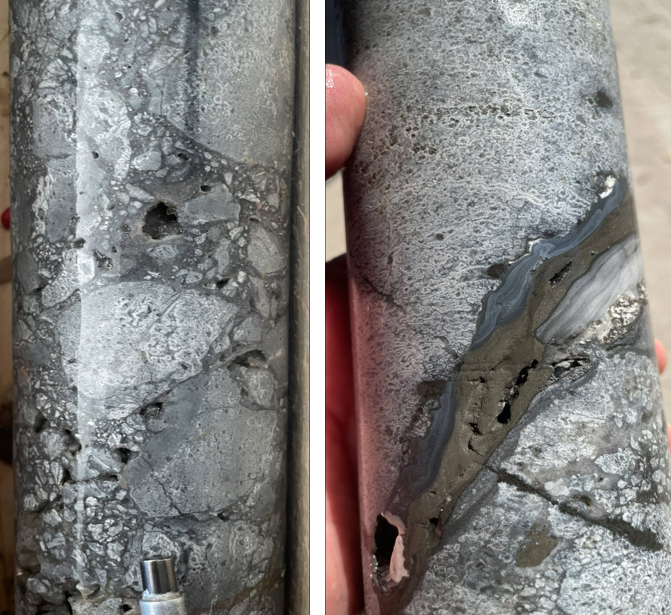
Figure 2. Examples of the Quartz-Sericite-Pyrite alteration stage from KPDD005 (HQ3 core).
- Left (63.2m): Strongly silicified and brecciated spherulitic rhyolite rock with an XRD-determined mineralogy of 69.7% quartz, 25.5% sanidine (hydrothermal adularia) and 0.7% pyrite. This potassic-silicic overprint contains 597 ppm As, 317 ppm Sb, 13.4 ppm Tl, and 0.45 g/t Ag (no Au). The elevated thallium signature is directly tied to ion substitution for potassium within the adularia crystal lattice, while arsenic and antimony are likely hosted within the arsenian pyrite fractions and along quartz grain boundaries.
- Right (69.9m): A pyrite-chalcedonic quartz vein displaying classic colloform banding textures, cross-cutting a strongly silicified and brecciated spherulitic rhyolite matrix. This multi-phase vein intersection yields 864 ppm As, 96 ppm Sb, 9.2 ppm Tl, and 0.61 g/t Ag (no Au). The high arsenic concentration and colloform silica gel textures confirm rapid fluid discharge and quenching, typical of the upper reaches of a low-sulfidation upflow zone.
5. Discussion |
Discussion
The Lutila Gold Project is located favourably between two of the largest Au-Ag epithermal vein systems within the Central Slovak Volcanic Field, the Kremnica gold deposit and the Banska Štiavnica gold-silver ore field, which collectively, have produced significant amounts of precious metals over many centuries.
The Property is located 5km south, along strike and within the same volcanic depression that hosts the historic quartz-adularia Kremnica gold mine (current JORC (2012) mineral resource estimate of M&I: 36.9Mt @ 1.36g/t Au (1.6Moz Au) and Inf: 31.5Mt @ 1.07g/t Au (1.1Moz Au))1 Historic gold production is estimated by Finka (1995) to be 1.48Moz.
[1] This is not a mineral reserve or mineral resource that has been prepared in compliance with the requirements of National Instrument 43-101. The technical and scientific information disclosed from neighboring properties does not necessarily apply to the Lutila Gold Project. The current JORC (2012) mineral resource estimate for the Kremnica gold mine consists of: Measured 24.6Mt @ 1.46g/t Au, Indicated 12.3Mt @ 1.15g/t Au and Inferred 31.5Mt @ 1.07g/t Au. Source: Metals Tech Limited, ASX Release, 8th May 2023 (https://wcsecure.weblink.com.au/pdf/MTC/02663482.pdf).
The Kremnica Vein II system which is located in the hanging wall position to the Kremnica gold deposit (and under the town of Kremnica) has similar dimensions to the currently defined Kopernica Vein System, being approximately 1,000 metres by 500 metres and consisted of more than 40 individual veins which were generally north-south striking and dipping to both the east and west. Interestingly, historic records suggest that the thickness of these veins decreased with depth. The highest gold values were recorded from within ore shoots and according to Bakoš et al (2017) from 1938 until mine closure in 1970, 18t @ 2.5% Au was mined. The vein system was discovered serendipitously during underground development and mining started at the end of the 18th century.
According to Kodera (2005) the Banska Štiavnica ore field has produced 2.6Moz Au and 129Moz Ag from the early middle ages until the twentieth century.
The fact that low to intermediate sulfidation Au-Ag epithermal vein systems are intimately associated with rhyolite volcanism during the period 12.4 - 11.2 Ma underpins the Company's exploration model (See Figures 3, 4, 5 & 6).
The newly discovered Kopernica Vein System, located within the North East Block, dramatically accelerates the exploration framework of the Lutila Gold Project. Drilling has successfully intersected the upper-level geological indicators and alteration vectors that typically sit directly above hidden low-sulfidation vein systems. The following technical attributes make further targeted testing of this upflow centre highly compelling:
- Intact Epithermal System Confirmed.
- Broad Upflow Zone Defined.
- Advanced Predictive Modeling Established.
- Key Mineralisation Trends Defined:
- First Adularia Discovery (KPDD005).
- West Vein Potential (KPDD004).
- Multiple Parallel Targets.
- Tier-1 Jurisdiction & Infrastructure Advantage.
- Situated Within a Tier-1 Historic Trend.
- 100%-Owned by the Company.
- Exploration target: underground, high-grade gold (Au) ± silver (Ag) quartz veins.
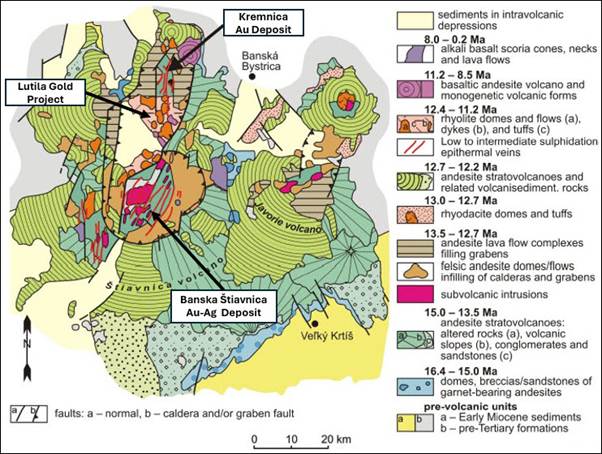
Figure 3. Regional geological setting of the Lutila Gold Project in relation to adjacent ore districts within the Central Slovak Volcanic Field (after Kodera et al, 2014).
6. About the Slovak Republic |
- Drill pads can be permitted within 3-months.
- EU and NATO member since 2004.
- Eurozone (€)member since 2009.
- Established mining industry, clearly defined mining legislation.
- No restrictions on foreign ownership.
- 21% corporate tax rate.
- 5% NSR for gold and silver.
- The use of cyanide for extractive purposes has been prohibited since 2014.
- Low-cost profiles, skilled local workforce.
- Exploration licences can be held for a 10-year period (4+4+2).
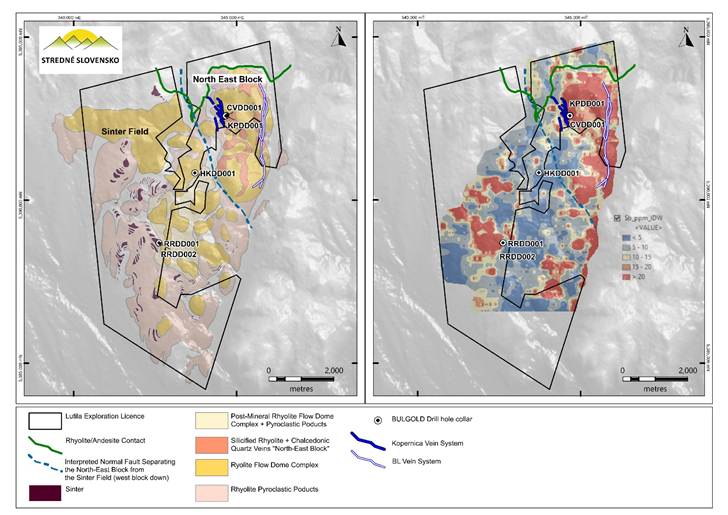
Figure 4. The Lutila Exploration Licence - Geology & Antimony (Sb) Soil Geochemistry.
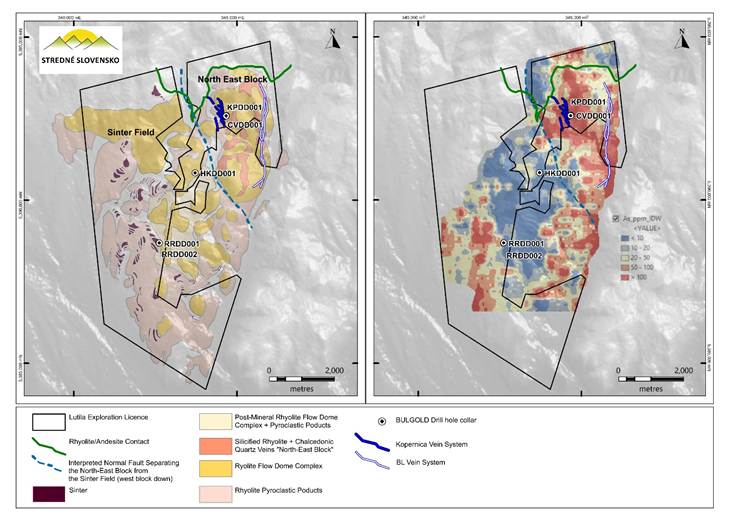
Figure 5. The Lutila Exploration Licence - Geology & Arsenic (As) Soil Geochemistry.
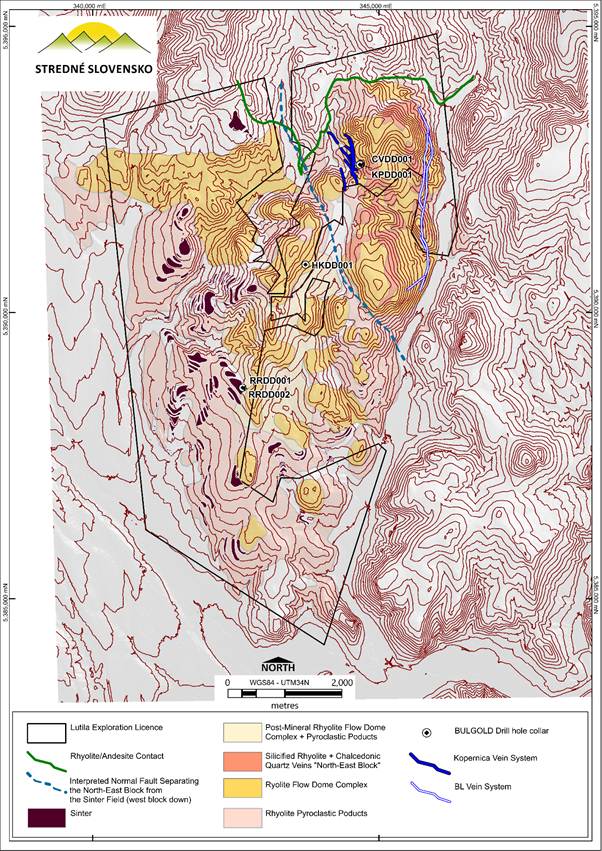
Figure 6. Lutila Gold Project - Geology.
Symbol | Code | Description |
| CVQ | Saccharoidal quartz vein (recrystallised chalcedony?) with drusy quartz lined cavities, weak banding may be evident, commonly massive; No crustiform-colloform or lattice bladed textures. Sb > 100ppm. |
| SCV | Massive (oxidised) cryptocrystalline chalcedony as coarse veins/veinlets (red, brown, yellow), may have associated rhyolite rock, commonly not. May contain relict unoxidised portions containing pyrite. |
| RCB | Brecciated rhyolite rock with clasts of SCV + chalcedonic quartz matrix infill ± cross-cutting chalcedonic quartz veinlets ± silicified and brecciated rhyolite ± pyrite (hydrothermal breccia veins (HBV)); RCB rock (float) samples in the area of current drilling average: 0.45g/t Au, 2.9g/t Ag, 670g/t As & 188g/t Sb. |
| RCB-VQZ | Transition from RCB to VQZ. |
| VQZ | Crustiform-colloform chalcedonic quartz ± lattice bladed quartz with very little rhyolite rock ± vein cross-cutting relationships (>0.1g/t Au to ~3g/t Au ± sulfides (commonly disseminated/blebby ± colloform pyrite)). Indicates lattice bladed textures present (indication of boiling). |


Table 5. Detailed field description of the BULGOLD mapping and prospecting framework covering the western slopes of the North East Block and the Kopernica Vein System.
References:
Bakoš F., Chovan M., Žitňan P. et al, 2017. Gold in Slovakia, Vydavatel'stvo LÚČ, Bratislava, 2017 (in Slovak and English).
Finka, O., 1995. Zlatá Kremnica: Tisícročná história baníctva, Neografia vydavateľstvo, Monografie 71 pages (in Slovak).
Kodera P., Lexa J., Rankin AH., Fallick AE., 2005. Epithermal gold veins in a caldera setting: Banská Hodruša, Slovakia. Mineralium Deposita. 39: 921-943.
Kodera P., Lexa J., Fallick AE., Walle M., Biron A., 2014. Hydrothermal fluids in epithermal and porphyry Au deposits in the Central Slovakia Volcanic Field. Geological Society, London, Special Publications 2014, v.402; p177-206.
Konečný, V., Lexa, J., & Planderová, E., 1983. Stratigraphic division of Neogene volcanics in Central Slovakia. Západné Karpaty, Séria Geológia, 9, 1-203.
About BULGOLD Inc.
BULGOLD is a gold exploration company focused on the exploration and development of mineral exploration projects in Central and Eastern Europe. The Company controls 100% of three quality quartz-adularia epithermal gold projects located in the Bulgarian and Slovak portions of the Western Tethyan Belt: the Lutila Gold Project, the Kostilkovo Gold Project and the Kutel Gold Project. Management of the Company believes that its assets show potential for high-grade, good-metallurgy, low-sulfidation epithermal gold mineralisation.
On June 30, 2026, BULGOLD's issued and outstanding shares were 72,626,013 of which approximately 20.1% were held by Founders, Directors and Management. Additional information about the Company is available on BULGOLD's website (www.BULGOLD.com) and on SEDAR (www.sedarplus.ca).
Historic Sampling and Drilling Data and Information
The historical sampling and drilling data and information disclosed in this news release is related to historical exploration results. The reader is cautioned that the historical sampling and drilling data and information are based on prior data and reports previously prepared by third parties without the involvement of the Company. Information has been sourced from the Slovak Geological Survey in reports 83971 (December 1997) and 92416 (February 2013). BULGOLD has not undertaken any independent investigation of the historical sampling and drilling data and information, nor has it independently analyzed the results of the historical sampling and drilling exploration work in order to verify the results. The reader is cautioned not to treat them, or any part of them, as current due to the fact that a qualified person has not done sufficient work to verify the results and that they may not form a reliable guide to future results. No independent quality assurance/quality control protocols are known for these historic samples and drill holes and therefore the analytical results, data and information may be unreliable. BULGOLD considers the historical sample and drill data and information to be relevant as BULGOLD is using this data and information, in conjunction with the sampling conducted by BULGOLD, as a guide to plan its exploration programme for the Lutila Gold Project. BULGOLD's current exploration work includes verification of the historical data and information through further exploration.
Sampling, Analysis and QAQC of Exploration Drill Core Samples
Most exploration diamond drill holes are collared with PQ size, continued with HQ, and are sometimes finished with NQ. Triple tube core barrels and short runs are used whenever possible to improve recovery. All drill core is cut lengthwise into two halves using a diamond saw; the right-hand half looking downhole is sampled for assaying and the other half is retained in core trays. The common length for sample intervals within mineralized zones is one metre. Weights of drill core samples range from three to eight kilograms ("kg"), depending on the size of core, rock type, and recovery. A numbered tag is placed into each sample bag, and the samples are grouped into batches for laboratory submissions.
Diamond drill core and rock samples are shipped to SGS Burgas, Bulgaria. Quality control samples, comprising certified reference materials, blanks, and field duplicates, are inserted into each batch of samples and locations for crushed duplicates and pulp replicates are specified. All drill core and quality control samples are tabulated on sample submission forms that specify sample preparation procedures and codes for analytical methods. For internal quality control, the laboratory includes its own quality control samples comprising certified reference materials, blanks and pulp duplicates. All QAQC monitoring data are reviewed, verified and signed off by the Company. Chain of custody records are maintained from sample shipments to the laboratory until analyses are completed and remaining sample materials are returned to the Company. The chain of custody is transferred from the Company to SGS at the laboratory door.
At the SGS Burgas laboratory, the submitted core samples are dried at 105°C for a minimum of 12 hours and then jaw crushed to ~80% passing 2-6mm. Sample preparation duplicates are created by riffle splitting crushed samples on a 1-in-20 basis. Larger samples are riffle split prior to pulverizing, whereas smaller samples are pulverized entirely. Pulverizing specifications are 90% passing 75 microns. Gold analyses are done using a conventional 50-gram fire assay and AAS finish. Multi-element analyses for 49 elements are done using a four-acid digest and an ICPMS finish. Some older multi-element analyses have been carried out for 32 elements and are done using a four-acid digestion and an ICP-OES finish.
Qualified Person
The scientific and technical information in this news release was reviewed and approved by Mr Sean Hasson, a Qualified Person as defined by National Instrument 43-101 and President and Chief Executive Officer to the Company.
Neither TSX Venture Exchange nor its Regulation Services Provider (as that term is defined in the policies of the TSX Venture Exchange) accepts responsibility for the adequacy or accuracy of this release.
Cautionary Statement Regarding Forward-Looking Information
This press release contains forward‐looking statements and forward‐looking information within the meaning of applicable securities laws (collectively, "forward-looking statements"). These statements relate to future events or future performance and include statements relating to the exploration and drilling plans of the Company and the timing thereof; future drillhole lengths at the Kopernica Vein System and the anticipated cost savings; the exploration potential within the Kopernica Vein System; the potential for the Kopernica Vein System to possess conditions necessary for bonanza-grade gold veins; the gold window likely spanning a vertical range of 250-300 meters; the Company's decision not to drill additional holes within the Sinter Field in the short to medium term; the identification of the Kopernica Vein System establishing the Company as a leading candidate for growth and discovery; the Company's assessment of various strategies to advance the discovery process on the Lutila Gold Project; the Lutila Gold Project as prospective for quartz-adularia epithermal gold mineralisation; the Lutila Gold Project reflecting a continuation of the same volcanic depression that hosts the Kremnica gold mine; the Company's exploration model for the Lutila Gold Project; and the potential of the Lutila Gold Project to benefit the Company's stakeholders. All statements other than statements of historical fact may be forward‐looking statements or information. The forward‐looking statements and information are based on certain key expectations and assumptions made by management of the Company. Although management of the Company believes that the expectations and assumptions on which such forward-looking statements and information are based are reasonable, undue reliance should not be placed on the forward‐looking statements and information since no assurance can be given that they will prove to be correct.
Forward-looking statements and information are provided for the purpose of providing information about the current expectations and plans of management of the Company relating to the future. Readers are cautioned that reliance on such statements and information may not be appropriate for other purposes, such as making investment decisions. Since forward‐looking statements and information address future events and conditions, by their very nature they involve inherent risks and uncertainties. Actual results could differ materially from those currently anticipated due to a number of factors and risks, including the inherent uncertainty of mineral exploration; the risk that the Kopernica Vein System does not contain economic quantities of gold or silver; the risk that drilling results may not confirm surface sampling results or geological interpretations; risks related to the accuracy of the Company's geological model and assumptions regarding vein geometry and the vertical extent of mineralisation; the risk that future drilling may not intersect mineralisation or may intersect mineralisation at grades lower than anticipated; risks related to title to mineral properties; and changes in laws or regulations, including environmental laws and regulations; and credit, market, currency, operational, commodity, geopolitical, liquidity and funding risks generally, including changes in economic conditions, interest rates or tax rates and general market conditions. Accordingly, readers should not place undue reliance on the forward‐looking statements and information contained in this press release. Readers are cautioned that the foregoing list of factors is not exhaustive. The forward‐looking statements and information contained in this press release are made as of the date hereof and no undertaking is given to update publicly or revise any forward‐looking statements or information, whether as a result of new information, future events or otherwise, unless so required by applicable securities laws. The forward-looking statements and information contained in this press release are expressly qualified by this cautionary statement.
For further information, please contact:
BULGOLD Inc.
Sean Hasson, President and Chief Executive Officer
Telephone: +359 887 560 545
Email: sean.hasson@BULGOLD.com
Website: www.BULGOLD.com
SOURCE: BULGOLD Inc.
View the original press release on ACCESS Newswire