

Daily swings of $50 to $150 of $50 to $150 are becoming a routine in the gold market. XAUUSD has been moving wildly from one session to the next. Prices climbed for a third straight session Thursday, rising toward $4,750 after Tuesday’s $40 rebound to around $4,550, which followed Monday’s sharp $130 drop to near $4,500.
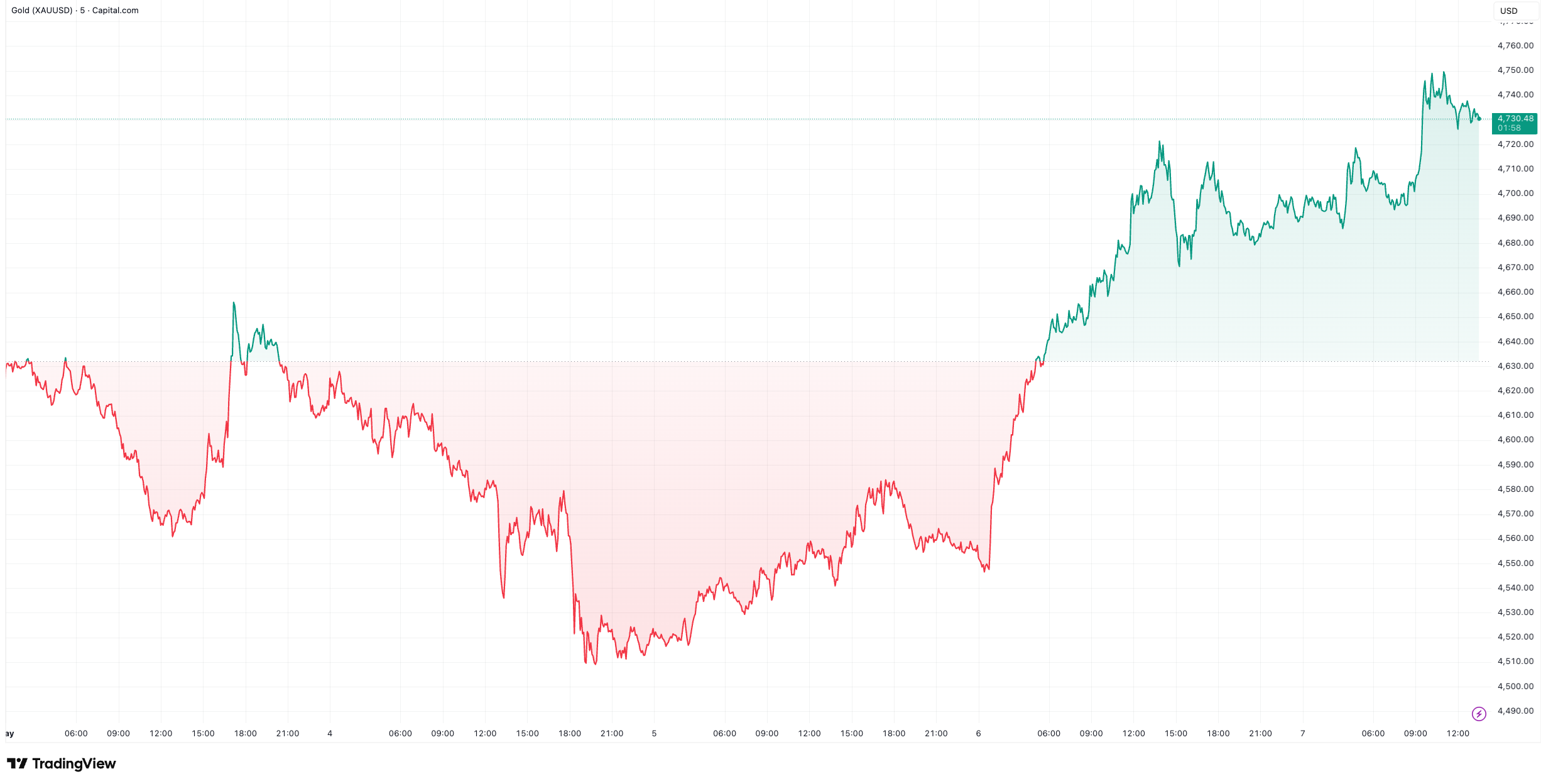
Normally, geopolitical conflict drives investors toward safe-haven assets like gold. This time, however, the reaction has been far less straightforward. Despite the ongoing war that began in late February, gold prices remain more than 10% below their highs.
A softer US dollar has provided some support for bullion, with the greenback slipping 0.1%. When the dollar weakens, gold becomes cheaper for foreign buyers, which typically boosts demand — simple market mechanics.
Brent crude oil has fallen roughly 6% this week, easing inflation fears, which in turn can influence expectations for interest rates.
Cooling inflation expectations may reduce the need for aggressive Federal Reserve rate hikes. That tends to support gold since lower interest rates reduce the opportunity cost of holding non-yielding assets like bullion.
Analysts now expect gold to remain trapped within a broad $4,600–$5,100 range as US-Iran negotiations continue to drive volatility. The latest catalyst came from reports that Iran is reviewing a US-backed peace proposal.
The US and Iran have delivered conflicting signals regarding the state of negotiations. Donald Trump described the talks as “very good” and suggested that a deal as “very possible”.
Iranian officials, however, have attempted to lower expectations. State media reported that Tehran is only reviewing the US proposal and considering its response through Pakistani mediators. A spokesperson for the Iranian parliament’s national security and foreign policy commission described the proposal as merely an “American wish list” rather than a realistic framework for peace.
Even so, any sign of reduced conflict risk has been enough to trigger sharp repositioning across commodity and currency markets.
For traders, the key now is the economic calendar. Upcoming US data releases — including job openings, ADP employment figures, and non-farm payrolls — could quickly reshape expectations for Federal Reserve policy. At the moment, gold is no longer trading purely on fear; it is moving at the intersection of inflation, interest rates, and geopolitics.