
Europe's proposed battery-origin rules would make EU-made components, including cathode materials, a condition for public procurement and support schemes. Yet EU cathode supply could cover only about half of 2030 demand under S&P Global Mobility's lower-demand fleet scenario, leaving room for diversified nickel, lithium, and graphite projects able to feed qualified processing.
Origin Rules Push Battery Investment Upstream From Cell Plants Into Materials
The proposed Industrial Accelerator Act (IAA) gives manufacturers a reason to fund materials output alongside cell assembly. A September 2026 study prepared for the European Automobile Manufacturers' Association (ACEA) identifies EU gaps in cathode materials, anode materials, and graphite processing.
Making Cathode Origin a Condition Raises Demand for European Materials Capacity
Covered schemes would first require at least three EU-origin battery components, including cells, rising to at least five, including cathode active materials (CAM) and battery-management systems. EU CAM supply meets roughly half of 2030 demand in the study's public and corporate fleet scenario.
Partner-Country Rules Widen Eligible Sourcing, but Component Origin Still Decides
Qualifying content from EU free-trade and customs-union partners would count as EU origin. Eligibility turns on component origin under EU customs rules, not mine location. Initial requirements would apply six months after entry into force, expanded ones three years later.
Battery Chemistry Choices Will Decide How Much Nickel Europe Actually Buys
Of 18 planned European gigafactories, 13 target nickel-manganese-cobalt (NMC) chemistry, while lithium-iron-phosphate (LFP) batteries could reach about 40% of EU vehicle production by 2036. Nickel sales depend on customers' chemistry choices and volumes.
Nickel Developers Are Lining Up Equipment and Financing Ahead of 2027 Decisions
Canada Nickel ($CNC) selected Komatsu and SMS Equipment on September 14 to supply Crawford's mining fleet, ahead of a targeted 2027 construction decision.
Lifezone Metals ($LZM.US) targets a Q1 2027 final investment decision at Kabanga in Tanzania, subject to lenders' review of an amended government agreement, and has applied for Strategic Project status under the Critical Raw Materials Act (CRMA).
Ingo Hofmaier, Chief Financial Officer of Lifezone Metals, sees nickel demand beyond Asia's dominant hubs:
"There's plenty of demand outside Indonesia and China. China has started dominating some of the supply chain aspects, especially around batteries, but they're also very strong in stainless steel."
Lithium Projects With Cash in Hand Can Advance Despite Weaker Sector Spending
Both NMC and LFP batteries use lithium, though concentrate needs conversion into battery-grade chemicals. The International Energy Agency (IEA) reports lithium-company investment fell about 40% in 2025.
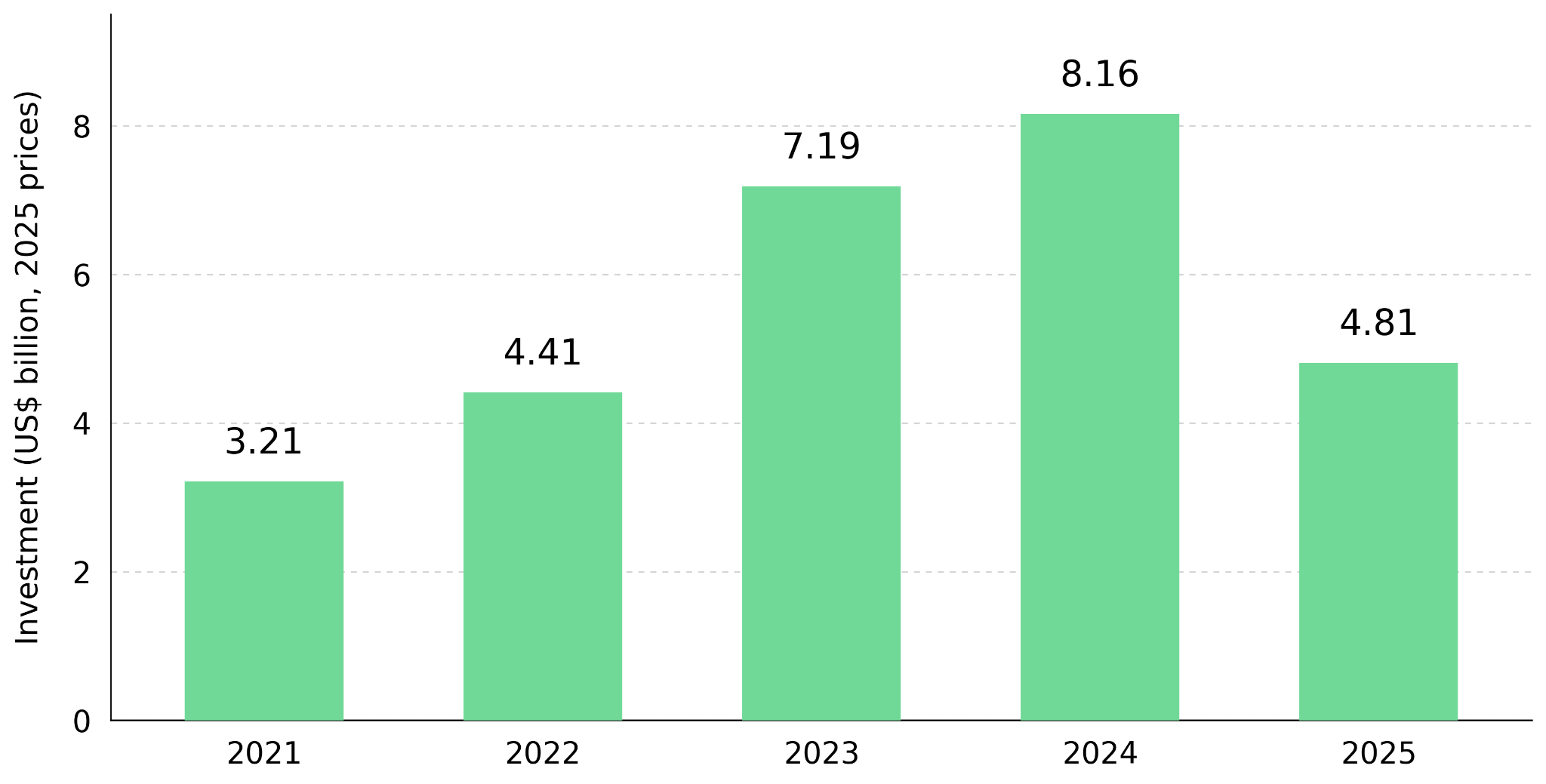
Secured cash lets lithium developers keep funding engineering, permitting, and early equipment orders while they arrange construction financing.
Lithium Ionic ($LTH) received US$30 million from its Salinas divestment, funding Bandeira toward a construction decision without issuing new shares.
China's Grip on Graphite Refining Opens Room for New Feedstock Sources
The IEA puts China at more than 90% of global graphite refining, and the study flags EU anode and graphite processing gaps. Natural graphite competes with synthetic material, so concentrate must meet buyers' specifications.
Sovereign Metals ($SVM.AX) completed the Kasiya Definitive Feasibility Study, modelling 275,000 tonnes of annual graphite output at full capacity on a 100% project basis, using existing rail and port links to Nacala.
Higher European Cell Costs Reward Suppliers Who Keep Delivered Costs Low
European-made cells cost up to 26% more for NMC and 33% more for LFP than lower-cost imports. The premium squeezes carmaker margins or lifts vehicle prices, so feedstock suppliers compete on mining and delivery costs.
EU Raw Materials Targets Cap Single-Country Reliance and Back Outside Projects
The CRMA sets 2030 benchmarks of at least 10% of strategic raw-material consumption from EU extraction, 40% from processing, and 25% from recycling, with no more than 65% from any single third country. Strategic Project status can also support financing for projects outside the EU.
Processing Access and Buyers Decide Which Projects Win
Europe's materials shortfall turns funded, low-cost nickel, lithium, and graphite projects into potential suppliers, yet origin rules reward processed components, not ore. Projects pairing secured funding with processing partners and qualified buyers hold the clearest path to revenue, with value rising as sales contracts and construction financing close. Q1 2027 investment decisions and the final IAA timetable are the nearest markers.
Read more: Proposed EU Battery Regulations Could Open New Markets for Diversified Miners
Disclosure: This article features Canada Nickel, Lifezone Metals, Lithium Ionic, and Sovereign Metals as company examples. None of the companies had influence over the topic, thesis, or conclusions of this article, and none exercised editorial control over its content. Komatsu and SMS Equipment are referenced for context only; Crux Investor has no business relationship with either company.