

The World Nuclear Association (WNA) estimates a 1,200 gigawatt electrical (GWe) fleet under the nuclear tripling target could need about 250,000 tonnes of uranium a year, against roughly 60,000 tonnes of primary production in 2025. With projects taking 15 to 20 years to move from discovery to production, capital has to commit long before reactor demand becomes visible.
Long Mine Timelines Force Uranium Capital to Move Before Reactors Need Fuel
WNA's outlook puts global capacity at 1,457 GWe by 2050, yet more than 550 GWe of national targets have no project under construction, planned, or proposed. Because exploration, metallurgy, permitting, financing, and construction run in sequence, mine supply cannot respond quickly once utilities need more fuel.
Project Execution Now Decides Future Supply
The OECD Nuclear Energy Agency (NEA) and International Atomic Energy Agency (IAEA) identify more than 8.1 million tonnes of uranium recoverable below US$260 per kilogram, enough for higher projected requirements through 2050. The constraint is whether projects finish studies, permits, financing, and construction in time.
New Mines Are Missing From Recent Output Growth, Raising Exploration's Value
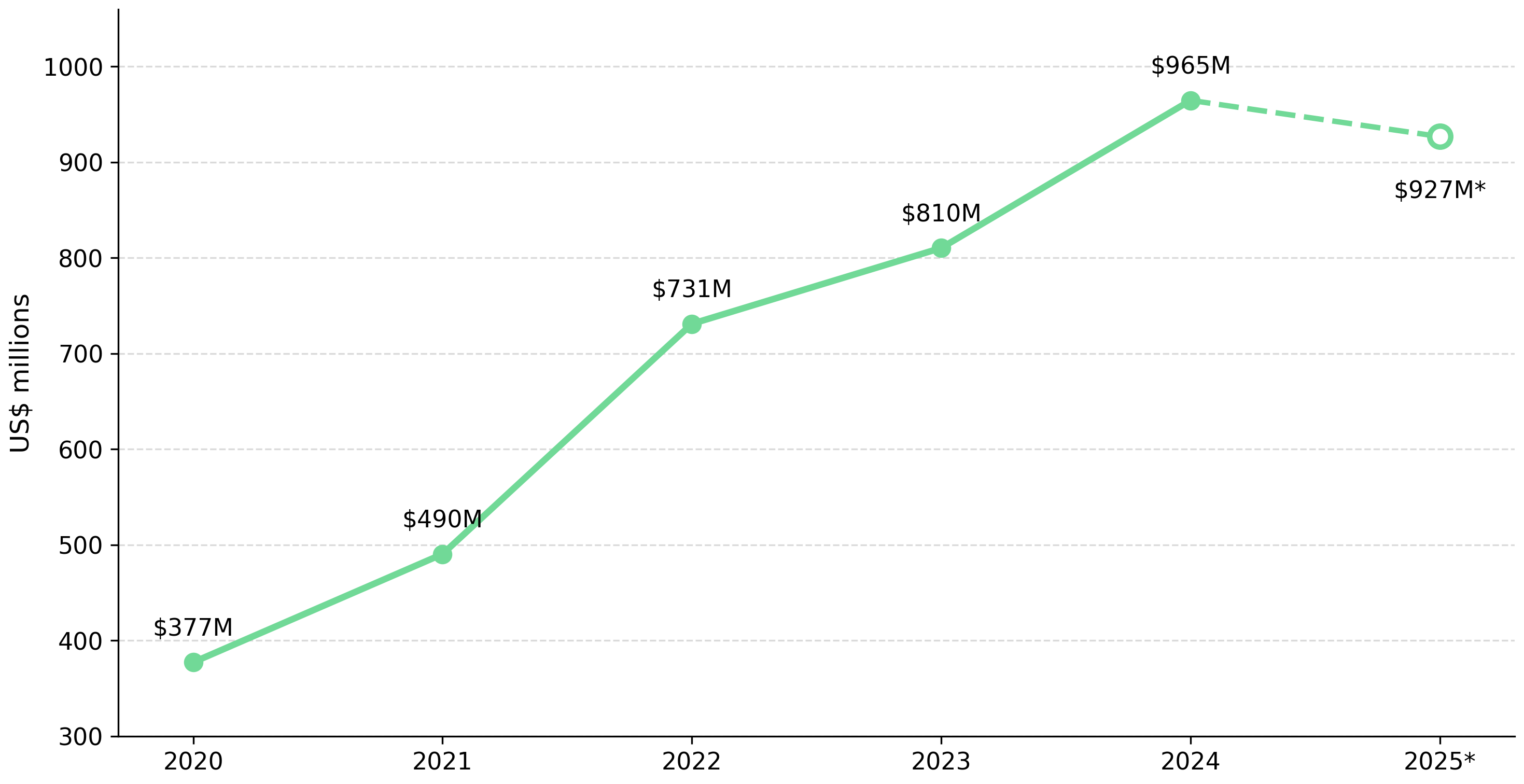
Exploration and mine-development spending rose from about US$377 million in 2020 to US$965 million in 2024, with incomplete preliminary 2025 reporting at US$927 million. Mine production reached 61,924 tonnes in 2024, but growth came mainly from restarts and expansions rather than new mines.
ATHA Energy ($SASK) extended the primary mineralized horizon at RIB North to 1.45 kilometers in 2026, while Lac 50 carries a conceptual exploration target of 60.8 million to 98.2 million pounds of uranium oxide grading 0.37% to 0.48% at Angilak.
Troy Boisjoli, Chief Executive Officer of ATHA Energy, explains why declining uranium supply raises project demand:
"You look at declining production rates going into the 2030 to 2040 decade and the scarcity of assets that are backfilling those. Then look at the number of companies that actually have a focus on building, going from discovery hole through to a strategy to build assets into the cycle. There are very few."
Metallurgical Testwork Separates Recoverable Pounds From Resources Still on Paper
Discovery becomes supply only once uranium can be recovered efficiently. Atomic Eagle ($AEU.AX) reported heap-leach recoveries of about 81% to 86% from Muntanga East testwork, supporting added scale for Muntanga's 58.8 million-pound Mineral Resource.
Grade and Resource Confidence Decide Which Uranium Projects Can Fill the Gap
Higher grades cut tonnes mined, and Indicated resources give engineering a firmer base. IsoEnergy ($ISO) intersected the strongest radioactivity to date along the Hurricane South trend, adding upside around its 48.6 million-pound Indicated resource grading 34.5% uranium oxide, backed by about C70.9 million in cash and equivalents.
Heavy US Import Reliance Lifts the Value of Domestic Uranium Supply
US civilian operators bought 46.9 million pounds of uranium oxide equivalent in 2025, yet US-origin material made up only 7% of deliveries. Foreign sources also supplied 77% of enrichment services, with Russia at about 26%. Existing in-situ recovery (ISR) plants offer a faster path to new production than greenfield mines.
enCore Energy ($EU) operates Alta Mesa with 1.5 million pounds per year of operating capacity, and its fully expensed Wellfield 3 Extension is ready once final permits arrive, anticipated in the fourth quarter of 2026.
William Sheriff, Executive Chairman of enCore Energy, on domestic supply:
"There aren't very many producers in the US. There are unlikely to be very many new ones in the next two or three years, or even within the next 39 months."
Even Lower Nuclear Growth Leaves Uranium Demand Ahead of Current Mine Output
NEA and IAEA project annual requirements rising from about 64,500 tonnes in 2025 to between 84,800 and 143,900 tonnes by 2050. Even the low case will require exploration, new mines, and existing producers working together.
Mine Readiness Will Set Uranium Asset Gains
Uranium is short not of resources but of projects ready to become mines. Grade, recovery, jurisdiction, funding, and permitting progress matter more than price alone. Re-rating follows as projects clear permits and financing ahead of utility contracting, with late-2026 US permitting decisions the nearest test.
Read more: Nuclear Tripling Target Pulls Uranium Supply Investment Forward
Disclosure: The article features ATHA Energy, Atomic Eagle, IsoEnergy, and enCore Energy as company examples. None of the companies influenced the topic, thesis, or conclusions of the article, and none exercised editorial control over its content.