
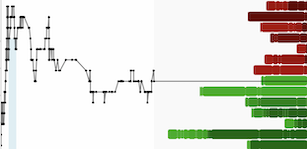


Europe entered the draw season at 74.62% full (845.2 TWh, AGSI+, Oct 31), the lowest since 2013. A probabilistic study (DeepPressAnalysis; 250k Monte Carlo runs) puts EU-27 below 10% on March 31 at 12.22%. Not the base case. But the aggregate hides the stress:
Germany starts near 61%. Modelled P(<10%): Germany 67.15%, DE+NL+AT 61.28%, EU-27 12.22%.
Italy (~91%) and France (~87%) hold their gas, and EU solidarity rules cover households and hospitals, not German industry.
11% of capacity is strategic reserve, so 30% on the headline is only 19% commercial gas.
At low fill, withdrawal capacity drops from 22.0 TWh/d to 8.13 TWh/d at 10%. Deliverability fails before volume.
Why it matters for North American gas: the US now supplies 64% of EU LNG imports (~30% of total EU gas supply), per the study’s sources. Hormuz laden transits ran 10–27 a month in Apr–Sep versus 95 in 2025, so Europe is leaning on Atlantic cargoes at the same time as Asian buyers compete for them.
The model’s brake is demand destruction: gross-balance breach probability is 38.97%, falling to 12.22% once price-driven demand cuts kick in. If the EU reinstated a wholesale price cap, the study puts breach probability at 52.71% (98.71% with cold), since flexible US cargoes would be pulled to Asia.
Watch next: EU storage vs 62% on Dec 1 and 46% on Jan 1, Hormuz LNG transits, the Dec 11 OFAC licence expiry, and any price-cap talk.
Scenarios are mine, not the study’s. Bull: Hormuz shut into March plus a cold winter. Base: near-normal weather, Hormuz reopening from January, EU low of 16.5–19.5% in late March. Bear: more than 65 transits a month by late December.
Market figures (TTF around 104 €/MWh in late October) come from the study’s sources. No price targets here. Not investment advice. I hold no position.
