

The UK inflation rate held steady at 3% in February, according to figures released by the Office for National Statistics. The reading was broadly in line with economists' expectations for the period. Meanwhile, core inflation, which excludes more volatile food and energy prices, rose slightly to 3.2% from 3.1% in January.
Typically, inflation releases attract intense scrutiny as markets try to gauge how the Bank of England might adjust its policy stance. However, this set of figures already feels somewhat outdated. Because the data reflects price pressures in February, it predates the dramatic geopolitical developments that have unfolded since — the outbreak of war in the Middle East — and therefore captures an economic environment that has already begun to shift.
February’s data predates the US-Israeli attacks on Iran, which drove up global energy prices. The conflict has disrupted shipments through the Strait of Hormuz, a key waterway for global oil and gas supplies. As a result, energy markets are bracing for another potential surge in prices.
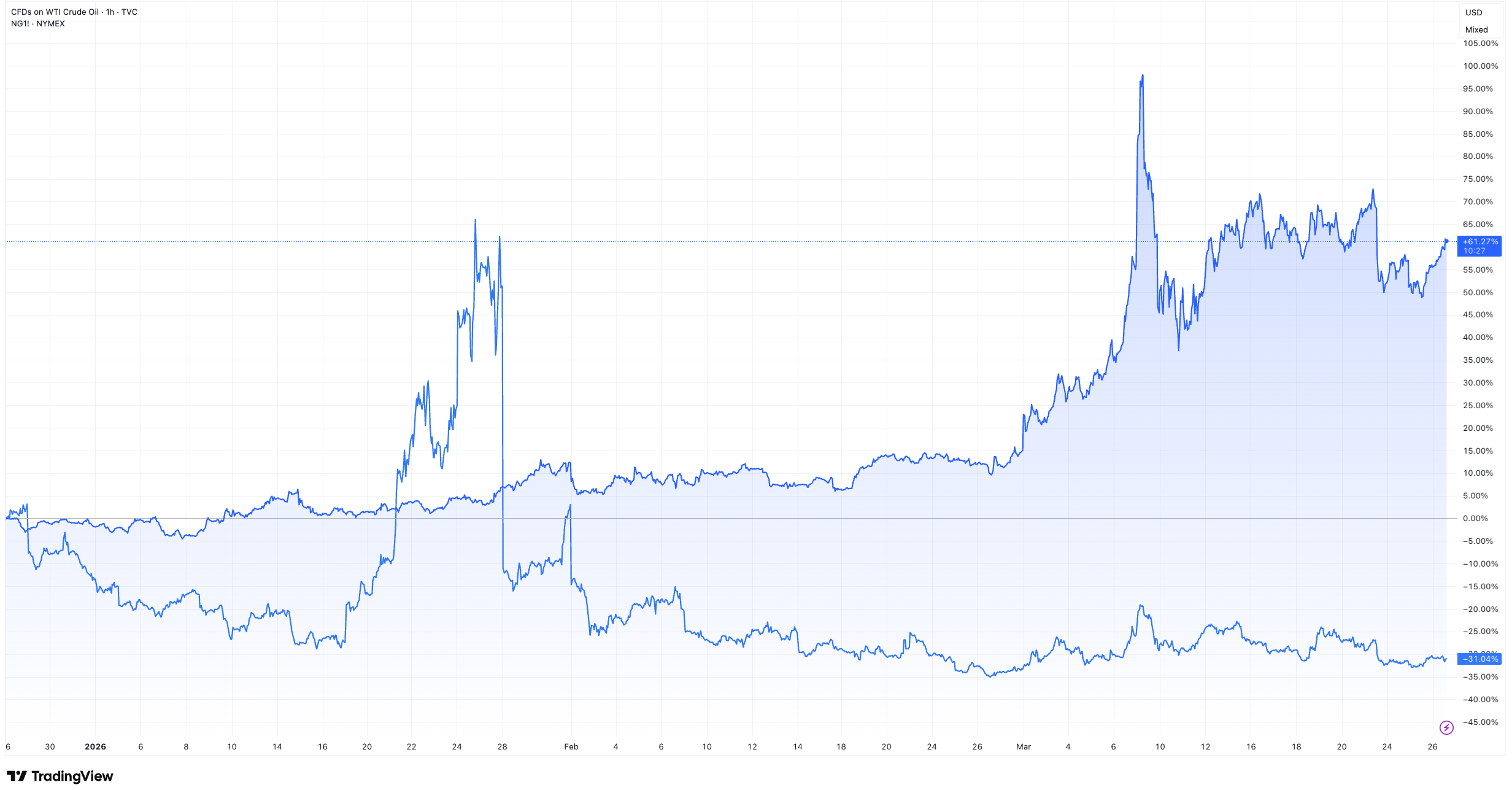
The U.K. is particularly exposed to such shocks due to its reliance on oil and gas imports, combined with relatively limited gas storage capacity. Even before the conflict began to reshape expectations, the U.K. was already grappling with stubbornly high inflation compared to its neighbors.
In the near term, economists expect the inflation to ease somewhat in April largely because household energy bills are set to fall following government cuts to “green levies.” Beyond that point, however, the outlook becomes more uncertain. If the conflict persists and energy prices remain elevated, consumer prices could begin rising sharply again later in the year.
Financial markets have already begun reacting to the latest developments. The GBPUSD pair ticked up toward $1.34 after the Office for National Statistics reported UK inflation held steady. Any significant escalation in the Middle East tensions could trigger the US Dollar (DXY) surge, potentially weighing on the pound and dragging the pair lower.
Prior to the geopolitical shock, inflation was widely expected to slow gradually this year, moving closer to the Bank of England’s 2% target and giving policymakers room to begin cutting interest rates. The war has complicated that outlook considerably.
For now, economists increasingly believe the Bank of England is likely to keep interest rates on hold at around 3.75%, and some even warn that another rate hike could become necessary if inflationary pressures intensify.
Such a tightening cycle would have clear consequences for the broader economy. Higher interest rates would raise borrowing costs for households and businesses, push up mortgage payments, and likely weigh on economic growth.
Meanwhile, cost pressures are already building across the economy. Manufacturers have reported their sharpest increases in input costs since 1992, increases that are widely expected to be passed on to consumers in the coming months. At the same time, although household energy tariffs are currently capped, a scheduled price adjustment in July looms as a potential catalyst for another rise in inflation.
Policymakers must decide whether to prioritize fighting the renewed inflation that the war could unleash or protecting an economy that was already showing signs of strain before the latest energy shock. Neither path offers an easy solution.