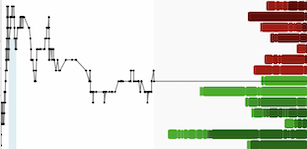


Japan's currency has fallen to its weakest level against the U.S. dollar in nearly four decades, last trading at these levels back in 1986. The yen has lost roughly one-third of its value against the dollar over the past five years.
The latest move pushed USD/JPY as high as ¥163.24, extending a years-long rally driven by higher U.S. interest rates, rising Treasury yields, and renewed geopolitical tensions that have boosted demand for the dollar.
The pair has now moved beyond the ¥160 level that previously triggered intervention by Japanese authorities. Geopolitical risks, fiscal concerns, and wide interest rate differentials have continued to weigh on the yen despite Tokyo spending $71.9 billion earlier this year to support the currency.
Currency intervention occurs when a government buys its own currency and sells foreign currencies in an attempt to influence the exchange rate.
Finance Minister Satsuki Katayama issued her strongest warning in weeks, signaling that authorities remain ready to act. More recently, however, officials have become more cautious with their comments, possibly to avoid giving markets advance notice of any intervention.
Even so, many analysts believe that any intervention would have only a temporary effect because the main reasons behind the yen's weakness remain unchanged.
The biggest factor is the interest rate gap between Japan and the United States. Higher U.S. rates encourage investors to move money into dollars. The Bank of Japan raised its policy rate to 1% on June 16, while the U.S. federal funds rate remains at 3.50%–3.75%.
Recent U.S.-Iran tensions have added to the pressure by pushing up oil prices and Treasury yields. Higher yields make the dollar more attractive, while higher energy prices hurt Japan, which imports most of its energy.
A weaker yen also makes imported goods more expensive, increasing costs for households and businesses that are already dealing with higher prices.
The dollar's strength has also weighed on other currencies. The pound dollar exchange rate fell 0.04% to $1.3369, putting sterling on track for a fifth straight day of losses. The decline came even though UK inflation slowed more than expected in June, mainly because petrol prices fell after tensions in the Middle East briefly eased. However, lower inflation was not enough to offset the dollar's strength.
For now, the dollar remains strong. Unless the gap between U.S. and Japanese interest rates narrows or geopolitical tensions ease, the yen is likely to stay under pressure. Any government intervention may slow the decline, but it is unlikely to reverse the trend for long.