
When uncertainty spikes, money tends to hide in shiny things — that’s the safe-haven trade. In other words, when conditions feel unstable, investors tend to trust some assets more than others. The first month of the year has been turbulent, marked by unprecedented events and a resurgence of uncertainty — and markets apparently don’t like it.
On 3 January 2026, the United States launched a military operation in Venezuela, capturing President Nicolás Maduro and declaring that it was now effectively in charge of South America’s fifth-largest country. The legality of this intervention has been widely questioned, with critics arguing it violated international law and the UN Charter.
The U.S. administration has defended its actions by framing them as targeting a narco‑terrorist organization. Still, no credible evidence suggests that Venezuela posed an imminent military threat to the United States — a key requirement for invoking self-defense under international law.
Despite these dramatic developments, equity markets showed remarkable resilience as investors bet the operation would not lead to a bigger geopolitical conflict. On the trading, the Dow Jones Industrial Average rallied 343 points, or 0.7%, while the S&P 500 and Nasdaq Composite climbed 0.6% and 0.8%, respectively.
However, uncertainty did show up elsewhere. Oil prices rose by more than 1% as traders weighed the implications of political upheaval in Venezuela, a founding member of OPEC that owns the largest proven crude oil reserves, approximately 303 billion barrels (17% of the global total).
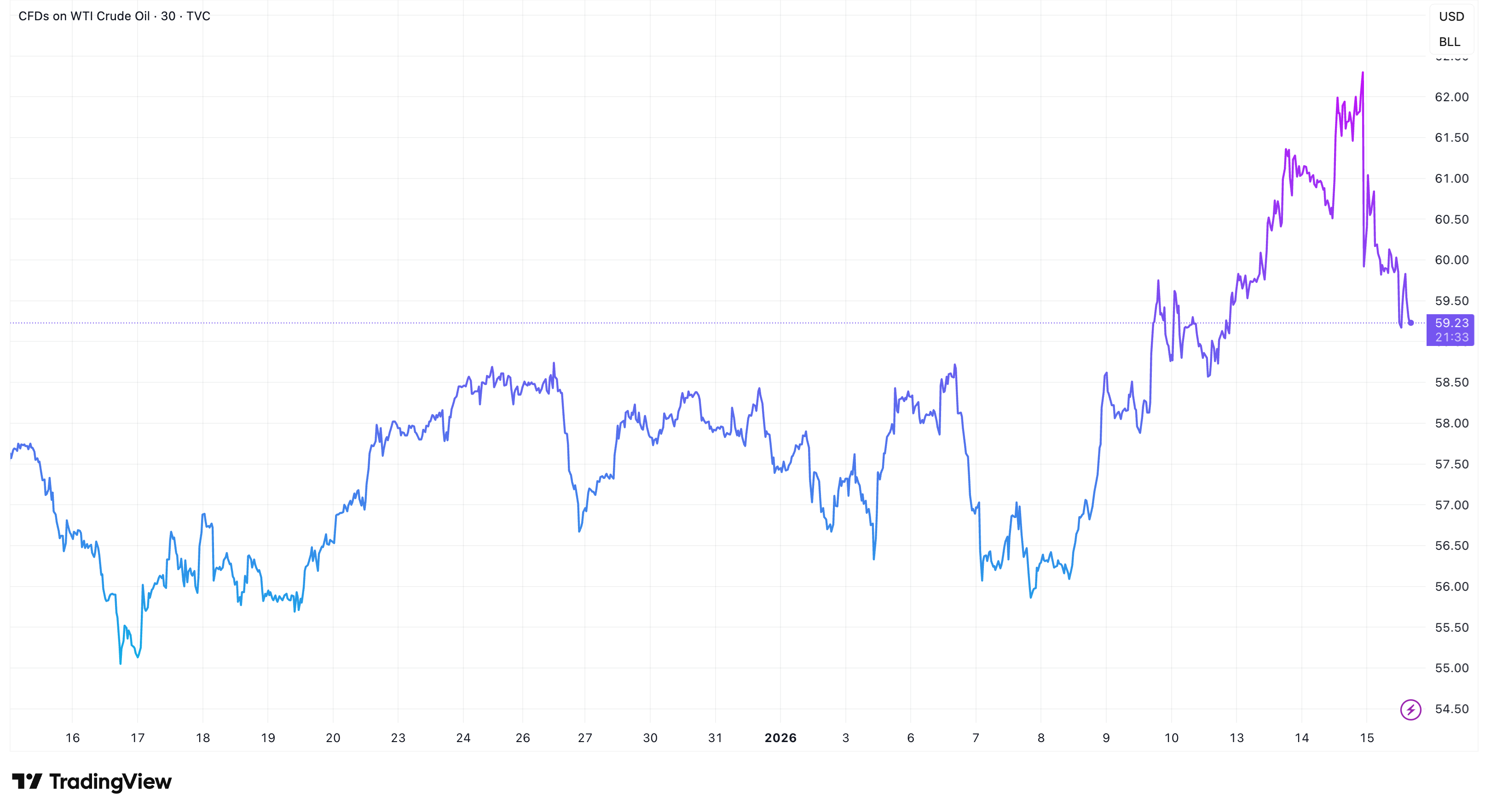
In the short term, oil markets face ambiguity: if a U.S.-supported government restores production and the Trump administration lifts sanctions, output could edge higher. Disruptions to supply infrastructure or political instability could tighten markets. Over the long run, increased U.S. investment may boost production, potentially putting downward pressure on prices; however, any recovery will likely be gradual and partial.
Domestically, another shock struck financial markets with news of a criminal investigation into Federal Reserve Chair Jerome Powell — an unprecedented escalation in tensions between the White House and the nation’s top central banker. This confrontation has many observers worried about the erosion of the Fed’s long‑cherished independence.
President Trump has denied plans to remove Powell, saying he remains in a “holding pattern” while the investigation proceeds. However, critics argue that even the perception of political pressure on the central bank could erode confidence in monetary policy.
Following this news Dow futures dropped nearly 200 points, while S&P 500 and Nasdaq futures sank 0.5% and 1%, respectively, as traders quickly priced in added political risk.
As uncertainty intensified, traditional safe havens experienced a surge. Gold rocketed to a fresh record above $4,600 per ounce as investors sought refuge from widening political and economic risk. At the same time, XAGUSD ripped past $90, reaching $91.51 per ounce, while stocks and bonds nervously side-eyed the Fed and Washington.