

It’s Nvidia’s stock market, and we’re all living in it. Once again, the company appears to be setting the tone for the broader market.
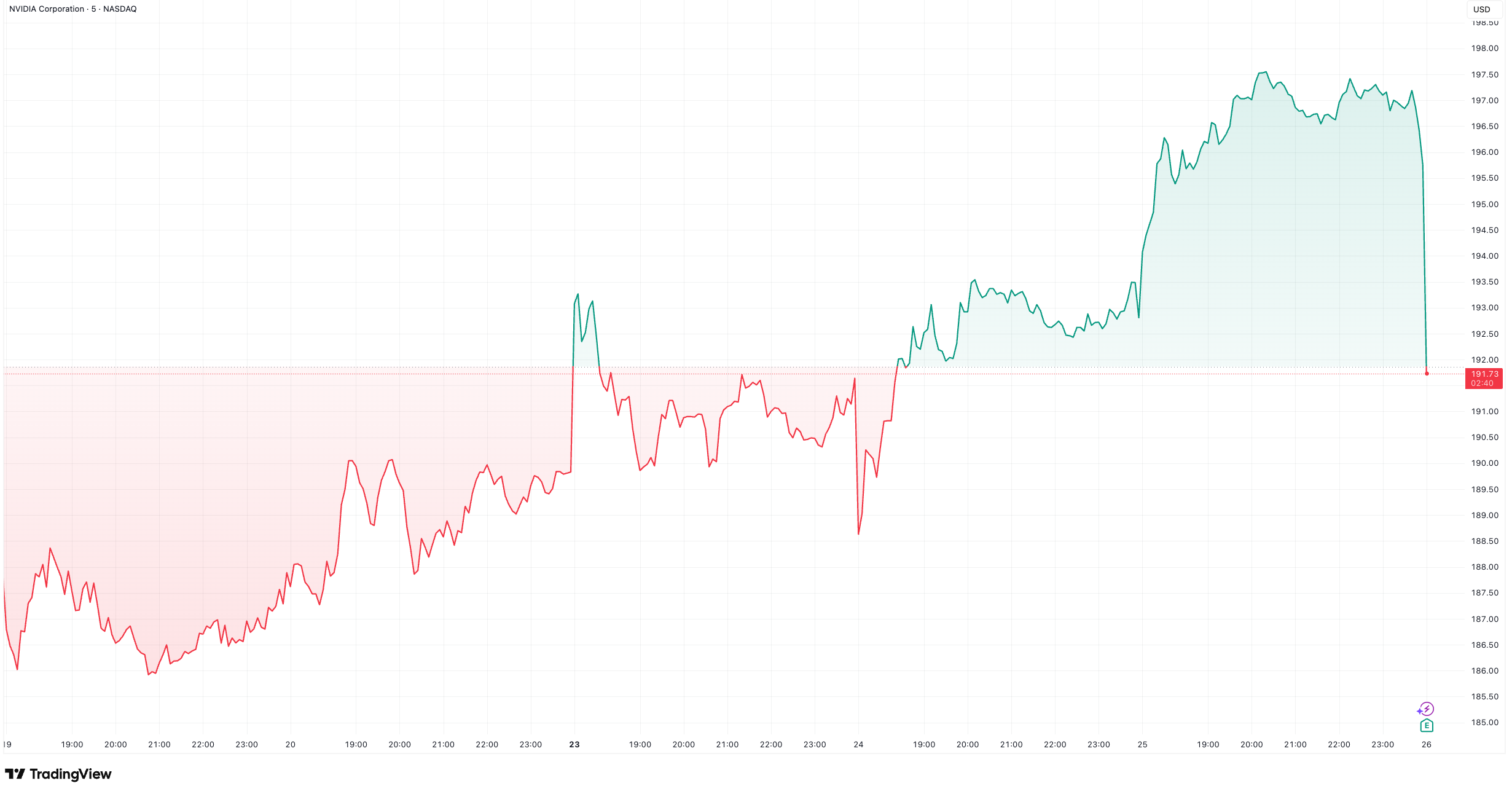
Enthusiasm around AI remains strong, but concerns over heavy capital spending and stretched valuations have dampened the sentiment across the tech sector. Nvidia stocks are up roughly 2% this year and remain about 11% below their October peak. Nvidia’s growth, however, has reassured investors, with the stock rallying on Wednesday ahead of the company’s earnings report. Throughout the 2024 and 2025 fiscal years, Nvidia beat Wall Street expectations every quarter.
The company delivered yet another blowout performance. Nvidia on Wednesday posted record quarterly revenue of $68.1 billion, up 73% year over year, while net income nearly doubled to $43 billion — a 94% profit jump.
Data center sales, the primary engine of the AI boom, accounted for more than 91% of total revenue, reaching $62.3 billion. Full-year revenue surpassed $200 billion for the first time, with annual net income climbing to $120 billion — figures comparable to the GDP of some nations.
Despite these results, the stock rose barely 1% in pre-market trading. Investors have grown more skeptical about the massive spending by big tech companies to advance their AI initiatives, with most of the so-called “Magnificent Seven” stocks starting the year declining.
Despite Nvidia’s outsized profits, scrutiny has increased around the company’s multibillion-dollar partnerships with AI firms such as OpenAI. The circular nature of some of these arrangements has led certain analysts to question whether the AI sector rests on shakier foundations than its proponents acknowledge.
One of Nvidia’s marquee deals — a proposed $100 billion investment in OpenAI — reportedly fell through earlier this month. Nvidia is now expected to commit $30 billion, as the ChatGPT maker prepares for a possible OpenAI IPO later this year at a valuation near $730 billion.
CEO Jensen Huang has repeatedly downplayed concerns about AI’s potential to disrupt or replace workers across industries. Last month, Huang also pushed back against fears that AI would undermine traditional software technologies amid a global sell-off in software stocks.
After years of market optimism surrounding generative AI, however, some investors have become more cautious, increasingly wary of volatility and the potential economic risks associated with the technology.