
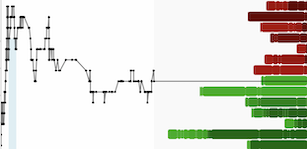


On Friday, November 20, $669 million flowed out of U.S. spot Bitcoin ETFs. On Saturday, with Wall Street closed for the weekend, Bitcoin fell to around $55,300, testing the lows of the current cycle. Before the day was over, it climbed back above $60,000.
Over the five trading days through Friday, net outflows totaled $1.79 billion. Another $1.07 billion had left the funds the previous week.
This is the latest in a series of declines that began more than a year ago. Bitcoin has lost nearly 60% of its value since reaching its October 2025 high.
That's nothing extraordinary for a market as volatile as crypto. But why has the hype around Bitcoin faded? To understand what happened, let’s go back to last October.
On October 10, 2025, just four days after Bitcoin chart reached its all-time high, the threat of new U.S. tariffs on Chinese imports sent crypto prices tumbling. In just 24 hours, exchanges liquidated $19 billion in leveraged positions across a range of cryptocurrencies. As prices fell, traders began running short of margin. Exchanges were forced to close their positions, and those forced sales pushed prices lower, triggering even more liquidations.
That crash shook investors’ confidence in the crypto market itself. Regulated exchanges can require market makers to maintain buy and sell quotes. Crypto exchanges have no comparable obligation to ensure liquidity. As investors saw that day, when prices plunge and buyers disapppear, the damage can spread across the entire market.
After that, investors started looking for opportunities elsewhere. With AI taking off and demand for semiconductors rising, they didn’t have to look far.
In the first week of June, while Bitcoin lost about 15%, four U.S. ETFs focused on semiconductors and memory chips attracted more than $3 billion in inflows. Over the same five trading days, roughly $1.72 billion flowed out of U.S. spot Bitcoin ETFs. Take Micron, which makes memory and storage products including DRAM, NAND and NOR flash memory, SSDs and high-bandwidth memory. The company’s value tripled in just 13 months, and it was hardly the only stock to soar over the past year.
Whenever another high-risk investment emerged with the promise of outsized returns, investors cashed out of Bitcoin to put their money into it. We saw it in the week before SpaceX went public, and again ahead of Anthropic’s debut. Both offerings went on to rank among the biggest IPOs in history.
Bitcoin is now trading around the highs of the previous cycle, a level that has historically served as an important support zone. If past price action is any any guide, we could be approaching the bottom of this cycle. There’s still room for Bitcoin to fall further, though, if demand for AI-related investments remains strong and continues to attract capital from retail and institutional investors worldwide.
Even if AI stocks fall, there’s no guarantee that the money will find its way back into Bitcoin. It’s the same old story with risk capital. As long as the economy holds up, money moves from one opportunity to the next. At the first sign of trouble, whether it’s rising inflation or the prospect of another round of rate hikes, investors pull out of riskier markets and look for safer places to park their money. At times like these, cash is king.
November 2026 is a perfect example. Fears that interest rates could keep rising, coupled with doubts about about the profitability of AI investments, sent markets tumbling. Bitcoin fell along tech stocks. On Saturday, November 21, it touched roughly $55,250. On November 24, Micron shares fell 11% in a single session after an analyst warned of a possible glut in memory chips. By then, the stock was already 47% below its June high. Just a few months earlier, investors had been pouring money into the sector while Bitcoin was falling. Now they wanted out of it too.
That left Bitcoin in a bind. During the months when investors were eager to speculate, it had to compete for buyers with companies that could already demonstrate how much money the AI boom was generating. Once investors began questioning those companies’ prospects, they cut their exposure to risk across the board. That meant selling Bitcoin too.
