

By: @NorthernLights
(Disclaimer: I am by no means a professional writer! For summaries of the site visit written by actual professional writers, refer to these two excellent pieces:
Henry Lazenby at Mining.com: https://www.mining.com/site-visit-kodiak-copper-drilling-to-expand-mineral-footprint-at-mpd-project-in-british-columbia/
Andrew Topf at Kitco: https://www.kitco.com/commentaries/2023-05-31/Porphyry-hunting-in-southern-B-C-with-Kodiak-Copper.html)
Back at the end of May, I had an invitation to head up to Merritt, BC to visit Kodiak's office there, and to travel onsite to Kodiak's MPD project located about an hour away. The visiting group was mainly composed of writers from mining publications and investing newsletters. Due to some extenuating circumstances, I almost wasn't able to make the trip, but then managed to go at the last moment. Most of the visitors rode in from Vancouver via shuttle, but due to my tight schedule, I drove directly to Merritt. It's an 8 hour one way road trip and it was already getting dark by the time I crossed the border at Sumas. Going up the Fraser Valley on the TransCanada Highway, I could just make out the shape of the mountains eerily looming out of the faded light and dense forest fire smoke. Proceeding up the Coquihalla Highway from Hope, I was marveling how much construction activity was going on in the dead of night. Major sections of the highway and bridgework are being reconstructed after the November 2021 flooding, coupled with ongoing work on the Trans Mountain pipeline. There were busy work sites and supply depots, all blazingly lit up all along the route, with reader boards warning of delays due to blasting, etc. After a number of hours, I finally spied the welcome sight of the glittering little town of Merritt nestled in the Nicola Valley. I pulled into the parking lot of the Best Western around midnight. The entire lot was stuffed with work rigs of all kinds and sizes. My kind of people, I thought.
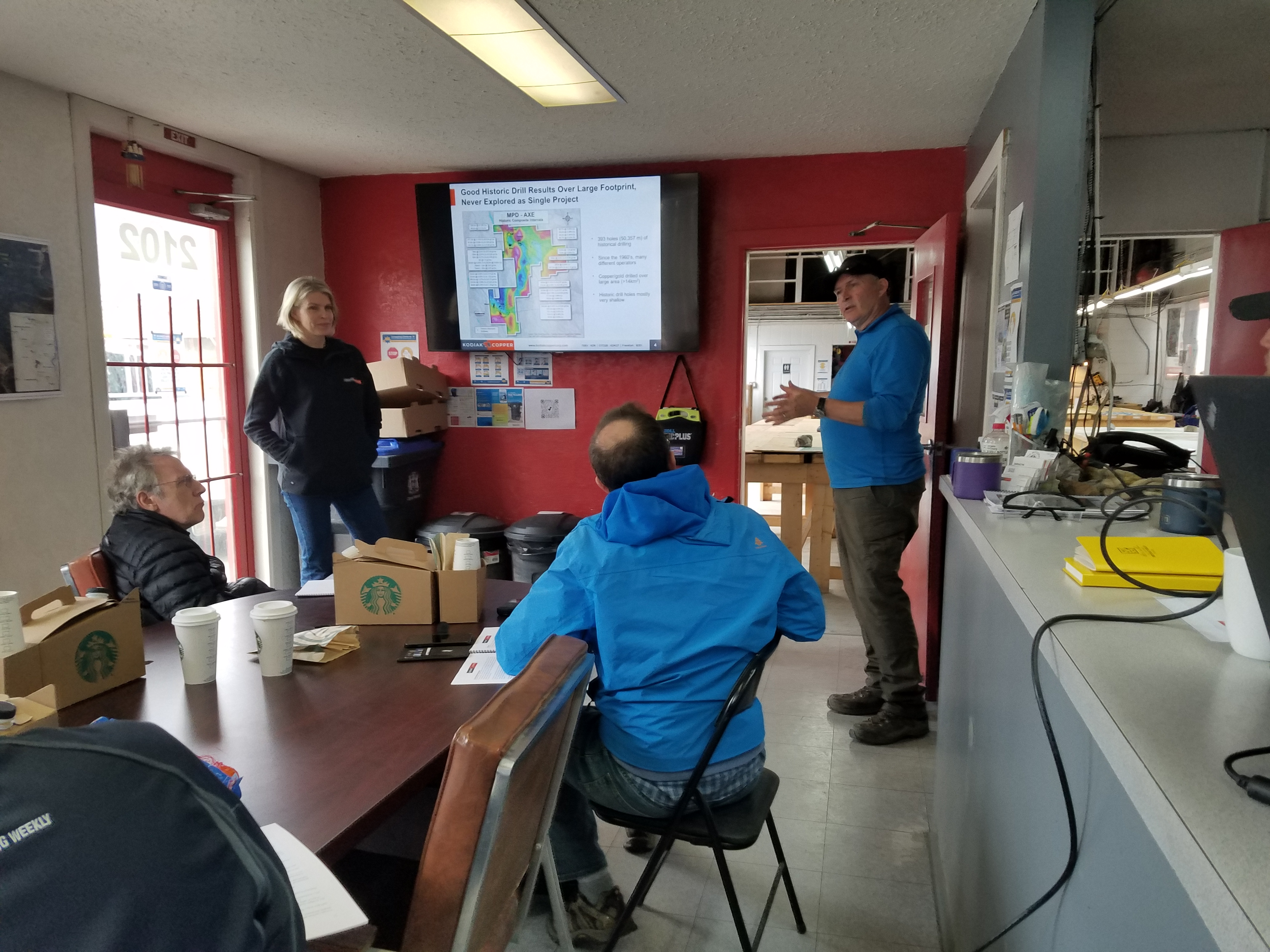
The next morning, we met up at Kodiak's tidy office and core yard in the heart of town. Apparently the building was at one time a retail tire shop and garage, and as such seems to be perfectly suited for the company's needs. It was great to finally meet the Kodiak team in person. The geology group is composed of a contingent of highly experienced veteran geologists, along with some very savvy younger geologists and field personnel. Claudia Tornquist, President and CEO, gave a presentation in the morning along with a Q&A session with Jeff Ward, VP Exploration, Dave Skelton, VP Project Management, and Nancy Curry, VP Corporate Development, along with the field and core logging teams. I was impressed by the team's careful, reasoned approach to the drill program and by the sheer number of targets the team is setting up, with much more to come. Kodiak is working with a very large land package of 226 sq. km, recently augmented by the addition of contiguous claims on the eastern side.
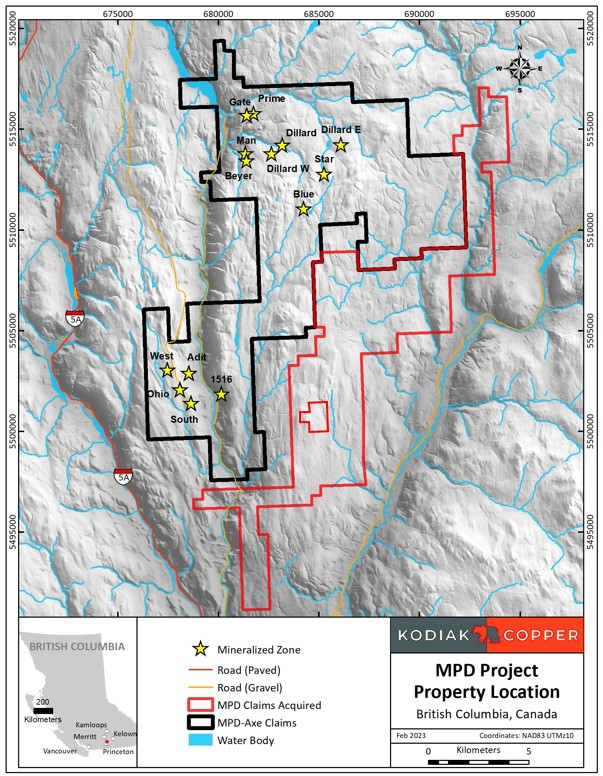
They have done a great job of working with the historic data and generating new grids where needed. Indications are that there is likely a deep intrusive that exists that could have fed the whole Gate-Dillard-Man target complex in the northern part of the property. There were a couple of key details from the Q&A discussion:
1. The 1516 target is a top priority with a "must drill" status. 1516 has a late-summer local water source, so it can be drilled late in the dry season when other targets would need water trucked in.
2. Work on the huge Dillard target, drilled last year, was not halted due to lack of prospective potential, but due to the target's large size and complexity, which requires further careful study before burning further drill budget on it.
3. The number of targets that the team has to choose from is actually quite staggering. I termed it "an embarrassment of riches". It will be interesting to see what else develops on the new claims to the east. The team is aggressively conducting soil sampling and induced polarization surveys across the property.
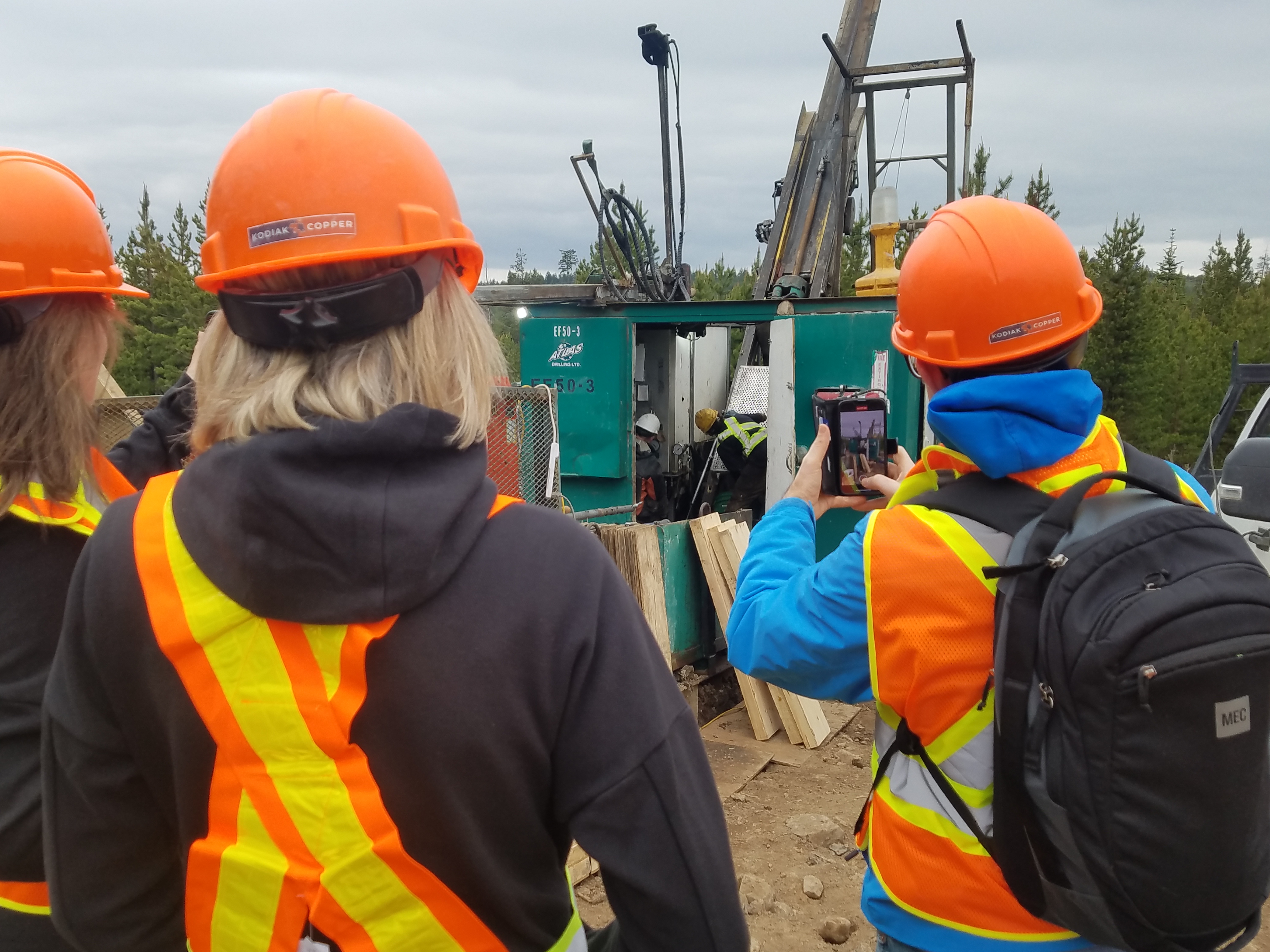
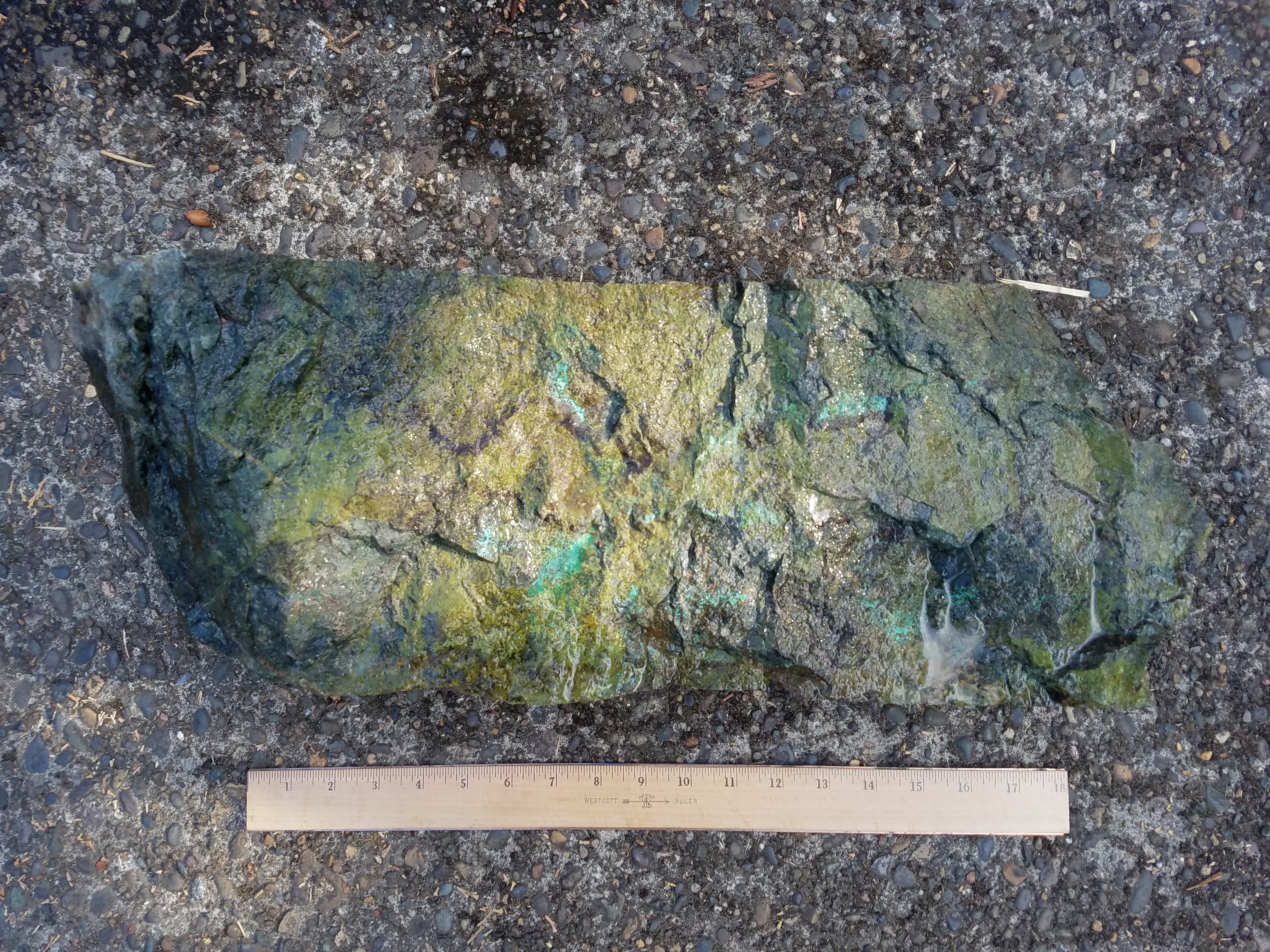
Everyone received an excellent bound printed summary of the MPD project which has been extremely valuable for reference. The Q&A was followed by a lunch and examination of maps and historic core out in the yard. In the core yard, I had an excellent meet-up with Kevin Tomlinson, a veteran geologist, investment banker and independent director for Kodiak. He expressed his enthusiasm for the company, and we agreed that there just aren't enough lifetimes to pursue all the interests that we would like to. Personally for me, that would be going back to school for a geology degree! We then all piled into pickups for a drive out to the drill site at the West target. Dave Skelton, Nancy Curry, Chen Lin and I were in the lead rig. Dave and I had a chance to talk about various topics on the way up and back and I was very interested in the forest management aspects of the land package. The areas we traveled through have been heavily logged over with dense regrowth of predominately lodgepole pine. The land in its current state appeared to have little or no immediate commercial value for forestry, which I suppose might bode well for any future mine permitting process. We made a stop on a high point on a ridge in order to get a good visual perspective of the property and the bearings of the various targets, and then proceeded to the drill pad site on the West target to observe the work there. West has two historic trenches, dug sometime in the 1970's, which the group was able to explore and take some samples (Figure 1). After the site visit, Kodiak hosted a dinner at Mr. Mike's Steakhouse in Merritt and I had a chat with Claudia over the deafening background noise, about her industry experiences and how she came to be the President and CEO. I complimented her on the Kodiak team. It's a first-class group of individuals, and Claudia told me that they essentially have had no turn-over. Claudia herself seems to have the savvy, experience, energy and enthusiasm to keep it all going in the right direction. Chris Taylor has recently become more involved after taking some well-deserved time off after the pressure cooker of Great Bear, and of course everyone is excited about his return.
The drive home was going to be a long one, so I stayed overnight in Merritt. The next morning, I stopped back at the office to rinse off the rock samples I had collected, and I had a chance for a quick chat again with Jeff Ward and Dave Skelton. Driving home along the beautiful Coquihalla River, I reflected on the visit, how impressive the Kodiak team is, and the target-rich environment they are working in. My strong impression is that this team will succeed in their endeavors to unlock copper porphyries at MPD.
Please see my chat with Claudia Tornquist below:
I caught up with Claudia last week by phone and she was gracious to answer a few questions regarding the results from drilling at the West target. Here is an excerpt from that discussion, edited for brevity. Full disclosure, I am a Kodiak shareholder.
NL: With the initial intercepts at West, can you provide a few more details on how you will proceed from here?
CT: We are drilling some additional holes at West and will then move the drill to the next target since we want to test 4-5 targets this year.
NL: Did/does the historic drilling data factor into your decision on where to collar your initial holes when drilling the target, or are you going off the magnetics and IP data?
CT: We take all available information into account: sampling data, magnetics, IP as well as historic drill data.
NL: The North-South intersecting copper-gold-silver veins are very interesting. Was anything like that encountered at Gate?
CT: No, we didn't see that on a significant scale. This is a new development.
NL: Any evidence that this North-South trend is connected to the surface mineralization at Beyer?
CT: We don't know at this point.
NL: The breccia is a pretty significant discovery at West, correct?
CT: The team is very excited about the high-energy breccia discovery, since it indicates the potential for a source zone at greater depth that is generally associated with higher grades.
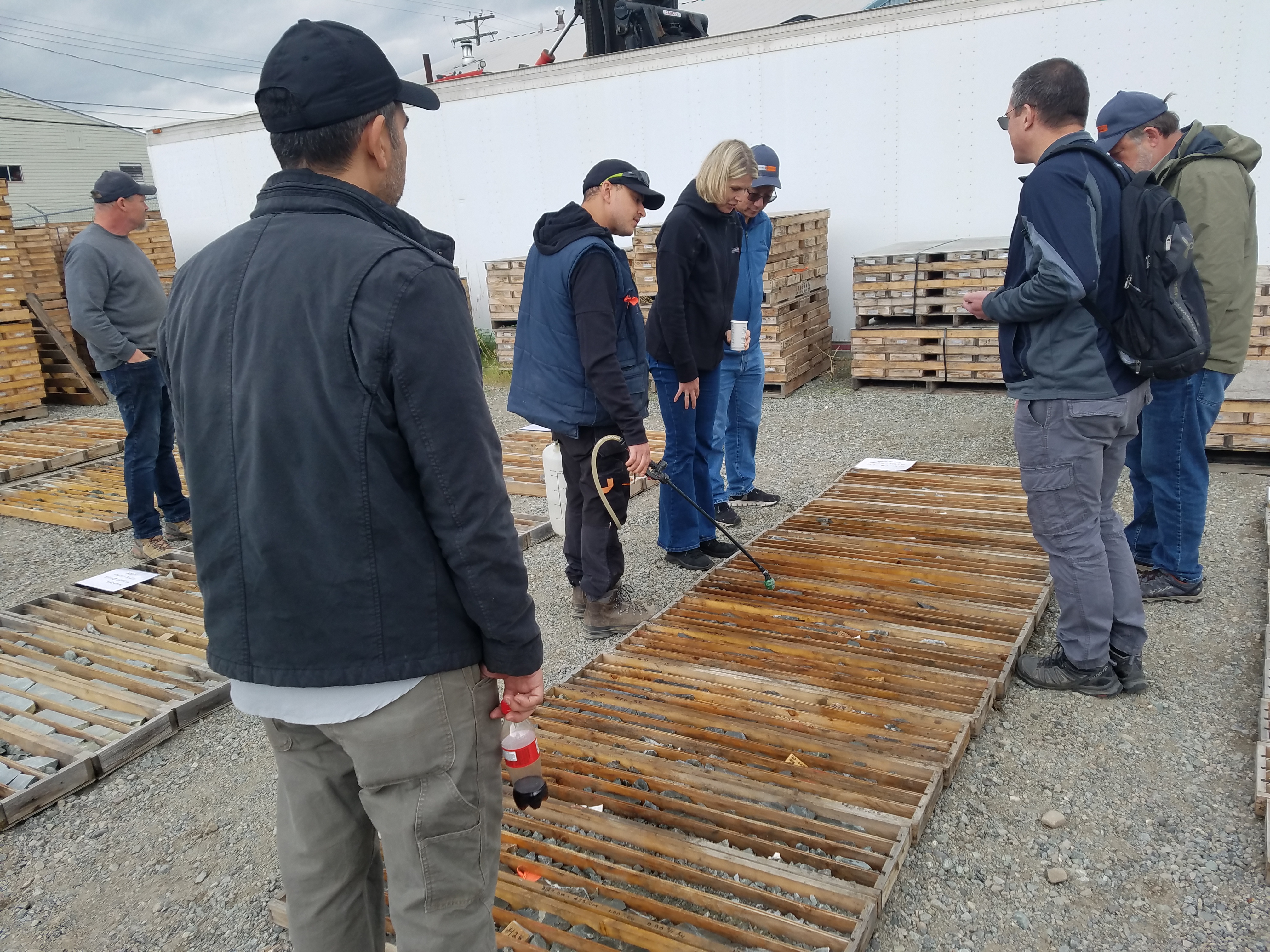
Figure 4: Examining some of the historic core from MPD.
NL: Just to confirm, how deep was the breccia drilled?
CT: The breccia was drilled from about 650 m to 820 m.
NL: That particular hole (AXE-23-002) was lost. What is your follow-up plan with the breccia?
CT: We'll put more holes in that same area to greater depth, if possible.
NL: How deep can you drill with the rig located at West?
CT: I think that one is capable of going to about 1000 m.
NL: So we've been talking about 4-5 targets to drill this season. What's the order of priority on those targets, and when will you take on 1516?
CT: At MPD South, West has been first of course, then the South target. At MPD North, we're drilling Man first and planning to do some work at Beyer too. 1516 will likely be tested later in the year as it is across the valley in the south. We can push the drilling as late as November, or perhaps into early December.
NL: So MPD North and MPD South basically sit on mag lows and you have this large notch on the west side of the claims package that sits between them on the north-south trend. Anything of interest out there in that area that might provide additional confirmation of the whole system?
CT: We are very happy with our current claims package and we recently added the additional claims to the east, so we have our hands full at this point!
NL: Fair enough! Thank you so much for your time.