March has been a crazy month for investors in junior miners. Many, (even high quality names), are down 25% to 40% from 52-week highs due to meaningful precious metal declines. Silver is down -22%, and gold -13%.
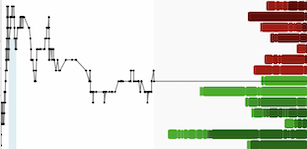
Silver down, but still @ $73/oz vs. $15-$25/oz for years…

Barrick & AngloGold Ashanti are down 30-35%, silver producers like First Majestic & Hecla Mining are -40-45%. I have no insights on where commodity prices are headed next week, but I believe precious metals will be meaningfully higher a year from now.
Industrial demand for silver (“Ag“) in solar panels, AI infrastructure, and EVs represent a decades-long demand surge that’s highly supply-inelastic. Every major clean energy & digital technology mega-trend requires Ag. Mines cannot respond quickly enough.
Should readers buy the dip? I don’t know. However, if one is bullish on precious metals over the medium-to-longer term, then there are bargains to be had.
It comes down to relative valuation. EV/EBITDA for producers, P/NAV for more advanced juniors, and EV/in-situ ounce for earlier-stage hopefuls. A very interesting company that’s under-followed due to a lack of news flow is Blende Silver (TSX-v: BAG) / (OTCQB: BAGGF).
No big news since the 2021 resource estimate!

It’s valued at roughly C$0.09/Ag Eq. ounce in the ground while the following Ag-heavy (pre-PEA) juniors are valued at an average of C$1.43/oz. That’s a huge discount, Blende Silver’s share price could triple and its valuation would still be incredibly cheap.
If we remove the high and low EV/oz figures of Capitan Silver & Silver Dollar, the average would be C$0.87/oz. vs. Blende at C$0.09/oz. Blende is only slightly lower grade, but its flagship project is more remote. I argue the severe valuation discount makes up for those factors.
Blende has a sizable resource at 100M Ag Eq. ounces (at spot prices). It’s in central Yukon, along with Snowline Gold, Hecla and others.
I spoke at length with CEO Andrew Rees and asked him eight questions. His responses were compelling and supportive of the potential for a re-rating in Blende’s share price. Please continue reading…

The Blende Project is the largest undeveloped open pit deposit of its type in the Yukon, but relies on a 58 km winter road. How will you transition from seasonal access to the permanent infrastructure required?
The winter road is used to move equipment & supplies during the winter, to prepare for summer exploration. During the summer, the Project is supported by helicopter.
There’s a proposed road — previously approved and currently being reevaluated — that would service Hecla’s Rackla project to our south. We would seek approval to extend that road ~24 km further to our Project.
Blende’s corp. presentation shows the flagship project near Na Cho Nyäk Dun (NND) First Nation lands. What is your team’s vision for creating an ongoing collaborative partnership?
Building a strong relationship with the NND is essential for any project in the region. Our approach is simple. Engage early, be transparent, and make sure the community benefits from the project as it moves forward.

Benefits can include steady, good paying jobs, contracting opportunities for local businesses, and training programs, coupled with (over time) considerable economic development (roads, power, faster internet, housing, etc.).
The goal is to ensure that development creates long-term economic value for the community and to that all stakeholders are well aware of exploration/development plans.
You have an extensive background in law & corp. governance. How do you intend to apply this to the Yukon regulatory landscape such as YESAB?
I’ve been actively involved in junior mining for 25 years. We placed two mines into production, one from discovery through to pouring gold bars. My background is understanding regulatory processes and making sure operations proceed in a rapid but prudent manner.

In Yukon that means working constructively with regulators, First Nations, and all stakeholders early on so that everyone understands the Project, and what we’re trying to accomplish.
The Yukon has a well-defined regulatory system through YESAB. If one prepares properly and maintains open communications with key groups, the process becomes straightforward & predictable.
Blende has a +5,000 meter drill program planned to increase the resource size. How will you balance expanding size with the need to complete a PEA?
The first priority is understanding the true scale of the system. The existing 2021 resource shows the Project has meaningful size, but there are opportunities to expand it along the mineralized corridor.
Blende Silver not on this map, but is ~65 km NE of Keno City

Drilling this year has the potential to materially increase the size and improve the confidence level of the resource. Once the geological scope is better defined, completing a PEA will be the logical next step.
Billiton was a major miner with significant resources. It dropped an option on your properties after two years. Any read on why this project hasn’t advanced much in 35 years?
Good question. A big part of the answer is simply timing. The project was explored primarily during the 1990s when metal prices were dramatically lower. Silver was frequently below $10/oz, and zinc under $0.40-0.50/lb., vs. $1.40/lb. today.
Another factor is the remoteness of the Blende Project. Having said that, we are less than 70 km from Hecla’s Keno Mill, which is ~15 years old and purpose-built for the same Ag-Zn-Pb mineralogy as our Project.

Snowline’s Valley project is also in central Yukon. It’s 100% going to be mine. Sitka Gold, Fireweed Metals, Metallic Minerals, Banyan Gold, Cantex Mine Development, are all in the same broad area, clustered within/around the Tombstone Gold Belt & Mayo Mining District.
The mineralized corridor extends several kilometers with multiple zones. Do you view Blende as a single deposit or the nucleus of a larger district scale camp?
It looks more like a district than a single deposit. Currently defined deposits are separated by significant distances along the same structural corridor, but as mentioned there has been limited drilling between them.
We have two deposits two kms apart along the same corridor. Historical work in the Central Zone intersected meaningful mineralization, but there was not enough drilling to include that area in the resource estimate.
When one combines stronger metal prices, looks at the scale of the 2021 resource, and the fact that the mineralized corridor extends several kilometers, we believe the Project has the potential to become much larger.

One of our main exploration objectives is testing whether these zones connect and identifying additional mineralized lenses.
In districts hosting carbonate-hosted silver zinc lead mineralization, deposits commonly occur along regional corridors. While every system is different, the geological setting at Blende suggests the real potential for additional deposits along the same trend.
Nevada is viewed as top N. American mining destinations. What advantages does Yukon offer that investors may underestimate?
Yukon has a long history of mining and a well defined regulatory framework. The geological potential is excellent and the territory has produced several significant deposits. Several success stories are advancing in the Yukon, most notably Snowline & Fuerte Metals, but also White Gold & Sitka.

Strategic investors in the Yukon include Agnico Eagle, Newmont, B2 Gold, Rio Tinto, Franco-Nevada, Osisko Gold Royalties,Mitsubishi Materials and Lundin Group + Eric Sprott, Pierre Lassonde, and Frank Giustra.
While projects can be remote, the regulatory process is clear and there’s strong cooperation among government, industry, and First Nations. For companies willing to operate in a northern environment, Yukon is a stable, up-and-coming jurisdiction.
Although there has not been much company news, the 2021 mineral resource estimate speaks for itself. In a strong silver market and with zinc up nicely why is Blende Silver valued at just ~C$8M?
Yes, the Company has been inactive for much of the past 3 field seasons while waiting for exploration permits to be renewed. As a result, the current valuation reflects the lack of exploration updates rather than the scale of the underlying metal endowment.
Blende currently hosts a large silver, zinc and lead resource containing ~C$9.8 billion of in-situ metal value at spot prices. The Company is valued at under 0.1% of in-situ metal value, well below the typical range of ~1.0% to 3.0%, where pre-PEA exploration plays tend to trade.

One of the major opportunities for us is simply closing that valuation gap as the market recognizes the size of the existing resource, and the potential to expand the mineralized corridor.
Our immediate focus is getting back to drilling and continuing to demonstrate the scale of the system. As exploration activity resumes, we believe the valuation will better reflect the underlying strength of the Project.
Thank you Andrew, I look forward to further progress this year.
Disclosures: Blende Silver is NOT currently an advertising client of Epstein Research [ER], and was not in the past. [ER] hopes to entice Blende Silver to become an advertiser in the future. Therefore, [ER] is biased in favor of the Company. Peter Epstein of [ER] owns shares of Blende Silver purchased in the open market.
Like all microcap stocks, Blende Silver is highly risky. Investors could lose all, or a substantial portion, of invested funds. Readers are urged to do detailed due diligence and consult with a financial advisor before investing in high risk microcap companies like Blende Silver.